How to Select the Right Steam Trap for Your Steam System
31.08.2026
The industrial use of steam as a heat transfer fluid requires the utmost precision at all stages of its generation, transportation, and energy transfer. Steam is one of the most efficient energy carriers due to its high specific heat of phase transition, but when it releases the latent heat of vaporization on cooled surfaces, it inevitably transforms into a liquid phase. Water accumulation in steam lines creates significant hydraulic resistance, reduces the heat transfer coefficient, and damages pipelines. The correct selection and proper integration of a device such as an industrial steam trap directly impacts the energy efficiency of the entire plant and eliminates the formation of stagnant zones and emergency shutdowns.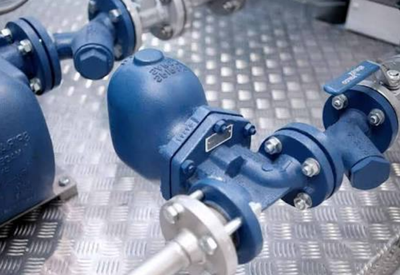
Incorrect valve selection leads to direct leaks of live steam or flooding of heat exchange equipment. In the event of a steam leak, the boiler runs idle, burning excess fuel to compensate for pressure and fluid mass losses. If the steam trap is clogged and does not drain, a condensate film forms in the system, reducing the useful heat transfer area by tens of times, disrupting pasteurization, drying, or chemical reaction processes. Implementing an integrated design approach ensures comprehensive steam system optimization, reduces the total cost of ownership, and prevents premature wear of shutoff and control valves.
In this article, we will examine in detail:
- How steam traps remove condensate while preventing live steam loss.
- The differences between mechanical, thermostatic, and thermodynamic steam traps.
- Which steam trap is best for steam mains, heat exchangers, tracing systems, and process equipment.
- Common steam trap selection mistakes and how to avoid them.
- Includes comparison tables, troubleshooting tips, and practical engineering recommendations.
What Is a Steam Trap?
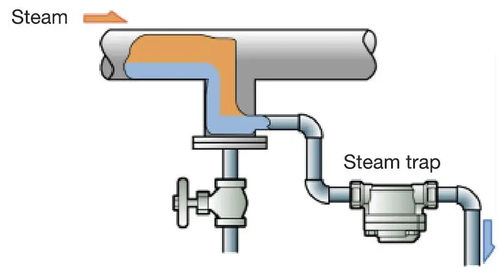
A steam trap automatically removes condensate and non-condensable gases from a steam system while preventing the loss of valuable live steam, improving efficiency, and protecting equipment.
A steam trap is an automatic pipeline valve that separates the fluid phases and traps dry saturated or superheated steam, while allowing accumulated condensate and non-condensable gases such as air and CO2 to pass freely. The device operates without an external electric or pneumatic actuator and responds to changes in the density, temperature, or dynamic pressure of the flowing fluid.
To build reliable condensate drainage units, modern enterprises use high-quality industrial steam trap solutions that can withstand significant hydraulic and thermal loads. The automatic operation of this unit prevents flooding of steam lines and ensures the normal operation of boilers and heat consumers. Each steam trap performs the critical function of protecting shut-off and control valves from erosion, water hammer, and abrasive wear.
Why Steam Traps Are Critical in Steam Systems
As steam moves through pipelines, it naturally cools through the pipeline insulation. The resulting condensate moves along the lower portion of the pipe at a velocity very close to that of the steam, ranging from twenty-five to forty meters per second on main pipelines. Without timely removal of the liquid phase, conditions arise for the formation of water locks and destructive hydraulic shocks.
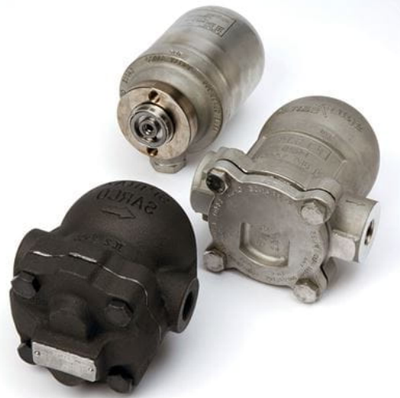
A dangerous situation, known as a water hammer, occurs when a water lock is trapped by a high-velocity steam flow or when steam bubbles within cooled condensate suddenly collapse. The speed of the water hammer can reach fifty meters per second, and the resulting pressure surge upon impact with a valve or branch exceeds one hundred bars. This leads to rupture of flanges, deformation of seats, failure of valves, and creates a direct safety hazard for personnel.
The presence of condensate in heat exchangers creates a stable thermal resistance. The heat transfer coefficient from steam to the pipe wall is hundreds of times higher than through a layer of standing water. Furthermore, accumulating air reduces the partial pressure of the steam, leading to a drop in saturation temperature and reduced process performance. The entire steam system experiences increased stress when the lines are flooded, thereby losing overall control and reducing the accuracy of temperature control.
Field insight. “A steam system is only as efficient as its steam traps. Even a single failed trap can waste significant energy or reduce process performance.”
How Steam Traps Work
Steam traps operate by exploiting the physical differences between the vapor and liquid phases of water. These differences include density differences (steam is significantly less dense than water), temperature differences (condensate loses temperature when cooled below its saturation temperature, while steam maintains its saturation temperature at a given pressure), and differences in hydrodynamic properties (steam passing through a constriction causes a sharp drop in pressure and an increase in velocity).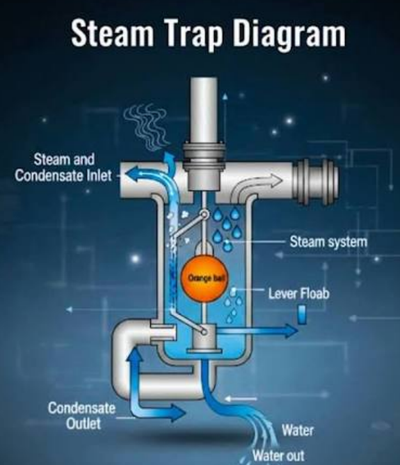
The pressure difference between the supply steam line and the condensate collector serves as the primary driving force forcing liquid through the seat.
The process that ensures condensate removal involves several phases of the operating cycle:
- Start-up period. Removal of cold water and accumulated air through the fully open valve assembly at low system pressure.
- Operating mode. Hot condensate approaches, subsequently filling the working chamber and maintaining a predetermined liquid discharge level.
- Valve closing. The approach of live steam triggers the shut-off mechanism, closing the outlet.
- Cyclic opening. As a new portion of condensate accumulates and the working chamber cools, the discharge process is automatically repeated.
Types of Steam Traps
Mechanical steam traps
They are highly sensitive to load fluctuations and ensure maximum heat transfer rates in shell-and-tube and plate heat exchangers, autoclaves, drying drums, and digesters.
Thermodynamic steam traps
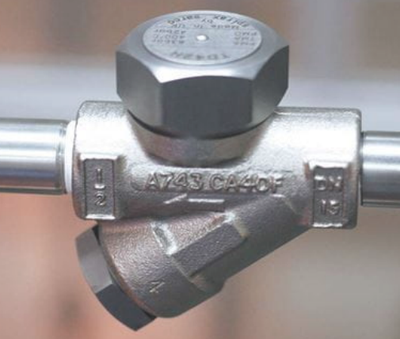
A typical thermodynamic steam trap has an extremely simple design, consisting of a body, a seat, and a single moving element – a flat steel disc. As hot condensate passes through, the disc rises, allowing the liquid to pass through. When steam approaches the valve, its high velocity beneath the disc creates a low-pressure zone, and the backpressure of the boiling secondary steam above the disc in the control chamber instantly presses the disc against the seat.
These devices are exceptionally robust, compact, and resistant to water hammer and freezing, making them ideal for draining main steam lines and outdoor installations.
Thermostatic steam traps
A modern thermostatic steam trap uses the expansion force of bellows with a heat-sensitive liquid or the bending difference of bimetallic plates as an executive element. When steam approaches, the element expands and blocks the flow area. When condensate lingers in front of the valve and cools several degrees below the saturation temperature, the element contracts, thereby opening the seat.
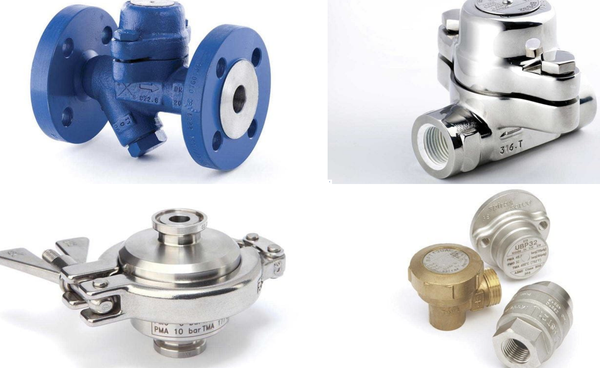
This allows efficient use of the sensible heat of condensate cooling, significant energy savings, and excellent air removal during start-up. Main applications include steam satellites, sterilizers and capacitive heating.
Key Factors to Consider When Selecting a Steam Trap
To ensure long-term system operation, it is necessary to consider a range of process and operational parameters. Proper steam trap selection requires an analysis of the nominal flow rate and dynamic operating conditions of the equipment.
When designing a condensate drainage unit, you must consider the following key parameters:
- Operating steam pressure. Maximum and minimum pressure at the installation point, taking into account losses in the control valves.
- Flow capacity. Condensate mass flow rate at steady state and during a cold start.
- Pressure drop. The difference between the steam pressure upstream of the valve and the backpressure in the condensate return line.
- Safety factor. Increasing the design flow rate by 1.5 to 3 times to reliably handle start-up loads.
- Air bleed. The valve's ability to quickly bleed large volumes of air during a cold start.
- Permissible backpressure. The ability to maintain operation under high pressure in the drainage network.
Field insight. “The best steam trap isn’t the most expensive one – it’s the one that matches the operating conditions of the application.”
Choosing a Steam Trap by Application
There is no universal steam trap for all industrial applications, as each process unit operates under unique hydraulic and thermal conditions. Different steam consumers have radically different requirements for liquid phase removal rates, bleed air volumes, and permissible fluid subcooling. Incorrect selection of the right valve type for a specific process inevitably leads to process failure, unnecessary energy losses, and constant hydraulic shock. Below are specialized recommendations for selecting equipment for key areas of the steam and condensate system.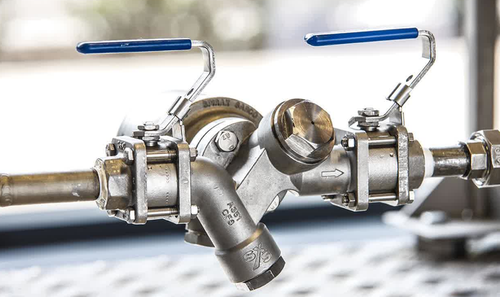
Steam mains
For draining steam transmission lines, a thermodynamic disc-type steam trap is the optimal choice. In these areas, the amount of moisture loss during steady-state operation is relatively small, but the risk of water hammer during start-up is high. The disc design offers increased mechanical strength, compactness, and freeze resistance when installed externally. The valve operates effectively at high pressures and instantly discharges condensate as it enters the drain pocket, maintaining the integrity of the entire steam system.
Heat exchangers
Continuous heat exchangers require instantaneous moisture removal, without the formation of stagnant zones or liquid back-up. A mechanical float-type steam trap is the optimal solution. Specially designed for such applications, the float-type Spirax Sarco steam trap ensures continuous liquid drainage directly at the saturation temperature and prevents flooding of the heat exchange surfaces. This ensures maximum heat transfer coefficient and stable maintenance of the process fluid temperature, even with sharp fluctuations in steam load.
Steam tracing
For trace heating lines for pipelines and tanks, it is recommended to install a thermostatic steam trap of the bimetallic or capsule type. Tracing systems do not require instantaneous moisture release, which allows condensate to be retained before the valve and cooled to a few degrees below saturation temperature. Using the sensible heat of the cooling water ensures maximum energy savings and high steam efficiency. An additional benefit is excellent air bleed during cold starts of long trace lines.
Process equipment
For digesters, drying cylinders, autoclaves, and reactors, the selection of equipment depends on the condensate drainage method and the risk of vapor lock. Rotating drying drums and siphon-tube units should use float valves with a vapor lock release device. Reactors with cyclic loading and modulating steam supply should use a high-capacity float industrial steam trap in combination with a vacuum breaker to prevent hydraulic back-up during pressure drops. Inverted-bowl models are effective in conditions of constant abrasive loads and high cycle rates.
Drip stations
For drain pockets in dead-end sections, manifolds, and distribution manifolds, a thermodynamic disc steam trap or a compact inverted-bowl valve is the best choice. Drip stations operate under constant pressure pulsations and potential dry steam accumulation, so the valves must be resistant to seat abrasion. Disc models provide reliable operation in a compact footprint, while inverted-bowl models prevent steam breakthrough when pressure drops to minimum levels and optimize overall condensate removal.
Common Steam Trap Selection Mistakes
Mistakes in valve selection lead to reduced production efficiency and accelerated equipment wear. To prevent malfunctions, it is important to consider the specifics of the process and avoid common engineering fallacies:
- Oversizing. Oversizing the valve's capacity results in the valve operating in a mode of frequent micro-openings, causing wear on cyclic components and loss of the water seal.
- Undersizing. Installing an undersized device traps condensate in the heat exchanger, reducing useful thermal output and creating the risk of water hammer.
- Neglecting the condensate load. Sizing equipment without taking into account peak starting liquid volumes during cold starts leads to regular flooding of steam lines.
- Incorrect pressure calculation. Using valves with an inappropriate pressure range blocks the valve from opening at high backwater pressures or leads to leaks at low pressures.
- Incorrect selection of the device type. Installing a model not designed for a specific process mode disrupts heat transfer stability.
- Lack of regular maintenance. Neglecting diagnostics leads to hidden steam leaks and undetected line flooding.
Table of troubleshooting methods:
Problem | Possible Cause | Recommended Solution |
Water hammer | Steam trap too small or failed | Check sizing and operation |
Steam loss | Trap failed open | Inspect and replace trap |
Poor heating | Trap blocked or undersized | Clean or resize |
Excess condensate | Incorrect trap selection | Review operating conditions |
Frequent failures | Wrong trap type | Match trap to application |
Energy Efficiency and Steam Trap Performance
The loss of live steam through an unadjusted or stuck-open valve results in financial losses. A single leak, three millimeters in diameter, at a pressure of ten bar, leaks tens of tons of steam per year, costing thousands of dollars in burning excess gas or coal.
Systems with high-quality condensate recovery return hot condensate to the boiler deaerator. This preserves valuable sensible heat, reduces the consumption of expensive chemically treated water, and minimizes boiler blowdown.
Ensuring high steam efficiency reduces a plant's carbon footprint, cuts CO2 emissions, and significantly lowers production costs by conserving fuel and energy resources.
Steam Trap Inspection and Maintenance
Systematic auditing of steam and condensate systems is a necessary element of efficient operation. Regular steam system maintenance reduces the valve failure rate from a typical 30% to less than 3% per year.
Diagnostic methods include the following approaches:
- Visual inspection. Checking operation through sight glasses or an open relief valve.
- Pyrometric testing. Measuring the temperature before and after the valve to assess the pressure drop.
- Ultrasonic diagnostics. Listening for high-frequency steam flow noises or cyclic clicks with an acoustic stethoscope.
- Scheduled replacement. Replacing worn internal elements and filter screens as part of scheduled preventive maintenance.
How I Choose a Steam Trap
Proper equipment selection requires a consistent engineering analysis, beginning with a study of the operating fluid's behavior and concluding with an economic calculation. 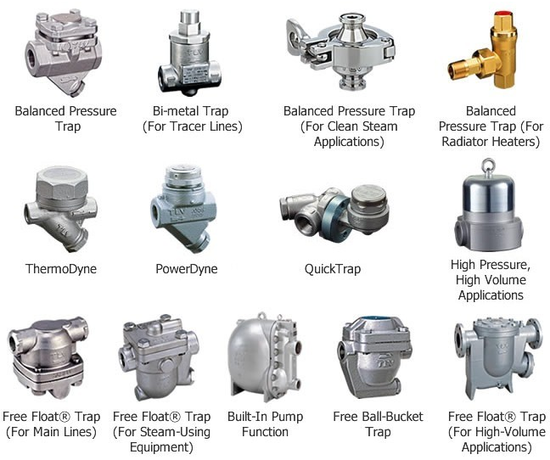
The step-by-step decision-making algorithm includes the following stages:
- Process analysis. Initial assessment of heat transfer characteristics and process load stability.
- Working pressure. Calculation of minimum and maximum pressure drop across the valve.
- Condensate volume. Determination of peak flow rates at startup and in steady-state conditions.
- Application type. Selection of valve design for a specific component of the steam and condensate system.
- Service accessibility. Providing conditions for convenient installation, inspection, and repair.
- Energy efficiency. Elimination of through-steam losses and conservation of thermal energy.
- Life cycle cost. Estimation of the total costs of purchase, operation, and maintenance.
Expert insight. “I don’t start by choosing a steam trap model. I start by understanding how condensate behaves in the system. Once the operating conditions are clear, selecting the right trap becomes much easier.”
FAQ
How do I know which type of steam trap I need?
The selection of the appropriate steam trap type depends on the nature of the equipment's operation, operating pressure, and condensate flow profile. Proper steam trap selection requires a clear understanding of whether continuous drainage is required or cyclic operation is acceptable. For heat exchangers, instantaneous moisture removal at saturation temperature is critical, while for tracing lines, the priority is to utilize latent heat. It is also necessary to consider the air parameters at startup and possible backpressure in the return header. Assessing the risk of water hammer and environmental conditions will help determine the final design requirements for the valves.
What's the difference between mechanical, thermostatic, and thermodynamic steam traps?
The main steam trap types differ in the physical principle underlying the separation of the steam and liquid phases. Any mechanical steam trap is activated by a change in liquid level using a float mechanism, ensuring continuous moisture drainage. A thermostatic steam trap, in turn, detects the temperature difference between steam and subcooled condensate using a bellows or bimetallic strip. A compact thermodynamic steam trap utilizes the difference in fluid flow velocity and dynamic pressure under a flat steel disk. Each of these three designs is designed for specific operating conditions, flow rates, and hydraulic loads.
How often should steam traps be inspected?
Preventive steam system maintenance should be performed regularly, at least once or twice a year. For critical process equipment on high-temperature lines, inspection is recommended every three months. Visual diagnostics, pyrometric inspection, and ultrasonic listening enable early detection of leaks or seat blockages. Systematic auditing reduces the average valve failure rate at a plant from 30% to less than 3%. Timely mechanical inspections prevent hidden financial losses from direct steam breakthrough and protect valves from erosion.
What causes a steam trap to fail?
One of the main causes of valve failure is mechanical impurities, slag, and scale coming from the pipeline. A destructive water hammer instantly deforms the floats, bends the internal levers, and damages the shutoff discs. Cavitation and abrasive wear cause erosion of the seat cross-section, leading to uncontrolled steam leakage. Incorrectly selected flow capacity causes the valve to operate in a constant chattering mode, accelerating component wear. Furthermore, corrosion of internal components due to improper chemical water treatment leads to seizure of moving parts.
Can the wrong steam trap increase energy costs?
An incorrectly selected industrial steam trap can significantly increase a plant's utility and operating costs. If the valve fails in the open position, live steam escapes unimpeded into the condensate collector, forcing the boiler to burn excess fuel. A reduced flow capacity causes flooding of heat exchangers and a sharp drop in the heat transfer coefficient. To compensate for the reduced temperature, process personnel are forced to increase system pressure, increasing boiler wear. Energy loss due to steam leaks can cost a plant thousands of dollars annually for each emergency unit.
How do I size a steam trap correctly?
Professional steam engineering strictly prohibits selecting a steam trap solely based on the diameter of the existing pipeline. The first step is to calculate the exact hourly condensate flow rate based on the equipment's thermal capacity and steam recovery. Next, the actual pressure drop between the supply line and the backpressure in the drain network is determined. A special safety factor is applied to the resulting volume to compensate for the increased flow rate during cold starts. The final calculation is verified against the specific model's capacity chart, taking into account the operating temperature range.
Which steam trap is best for heat exchangers?
For shell-and-tube and plate-type units, a mechanical-thermostatic float valve is the best choice. The reliable Spirax Sarco float-type steam trap removes condensate continuously and immediately at saturation temperature without flooding the tube space. This allows for maximum active heat exchange area and precise temperature control of the heated product. A built-in thermostatic element quickly vents accumulated air during startup, preventing air locks. The device instantly responds to sudden changes in process load, preventing liquid retention within the apparatus body.
Which steam trap is best for steam mains?
Trunk steam lines produce a small amount of condensate, but they are highly susceptible to hydraulic shock. A thermodynamic disc valve is ideal for drain pockets due to its mechanical strength. Its compact body and freeze resistance make it an excellent choice for outdoor installations. This device effectively handles high pressures and withstands sudden temperature changes in winter. Its simple design, with only one moving part, ensures years of operation without the need for regular, complex maintenance.
What are the signs of a failed steam trap?
Clear signs of a stuck closed valve include flooding of the equipment, a drop in temperature, and water accumulation. If the valve is stuck open, a sharp increase in pressure and the escaping of steam from the drains will occur in the condensate line. Constant metallic knocking and clicking sounds in the steam line indicate the onset of a dangerous hydraulic shock. When a failure occurs, an ultrasonic stethoscope detects either the continuous noise of passing steam or the absolute silence of a blocked passage. Visually, a malfunction is also indicated by frequent emergency shutdowns of the drive due to temperature and rising fuel bills.
How can I improve steam system efficiency with the right steam trap?
Complete steam system optimization begins with precisely matching the type of steam trap to the specific system conditions. Installing effective valves eliminates unnecessary loss of steam and stabilizes pressure along the entire line. Closed-loop condensate recovery allows hot, clean water to be returned to the boiler, preserving valuable thermal energy. Improving steam efficiency directly reduces boiler fuel consumption and greenhouse gas emissions. A comprehensive approach to valve modernization guarantees a return on investment within the first few months of equipment operation.

Author: Caroline Karol
Chief Sales Officer of Eltra Trade s.r.o.