Common Failure Modes of Solenoid Valves and How to Prevent Them
03.03.2026
Over the years, as a service engineer, I've learned one thing: a solenoid valve is simultaneously the most reliable and most finicky element of an automation system. In theory, it should last for years, but in reality, I constantly encounter situations where a sudden solenoid valve failure paralyzes an entire line. This often happens at the most inopportune moment, when deadlines are tight, and the spare part is out of stock.
In this article, I've compiled my experience with field diagnostics and repairs. We won't just be quoting specifications; I'll tell you how valves perform in harsh industrial environments, why they actually fail, and how to fix a solenoid valve.
Today, we'll cover the following:
● Most common solenoid valve issues – and how to recognize them;
● Root causes: voltage mismatch, debris, overheating, pressure imbalance;
● Real-world prevention tips – installation, wiring, filtration, coil selection;
● Valve types that fail differently (direct acting vs pilot operated);
● Includes repair checklists, diagrams, and field-tested advice.
Why Solenoid Valves Fail (Root Causes)
When I arrive at a site where a valve has "burned out," I first look not at the device itself, but at the system around it. Most problems arise during the design or installation stages.
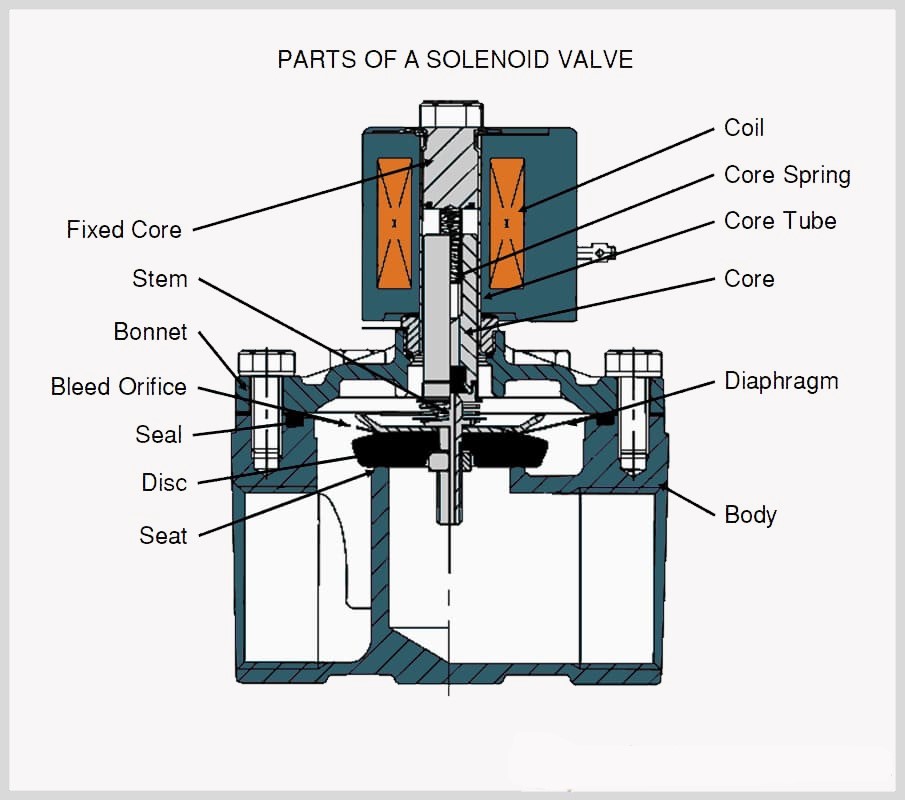
One of the most common causes is solenoid valve coil failure, caused by electrical overloads. If you apply a voltage higher than the rated voltage to the coil, it overheats. But undervoltage is even more dangerous: the magnetic field is insufficient to fully attract the plunger, and the AC coil begins to draw inrush current indefinitely until the insulation turns to carbon.
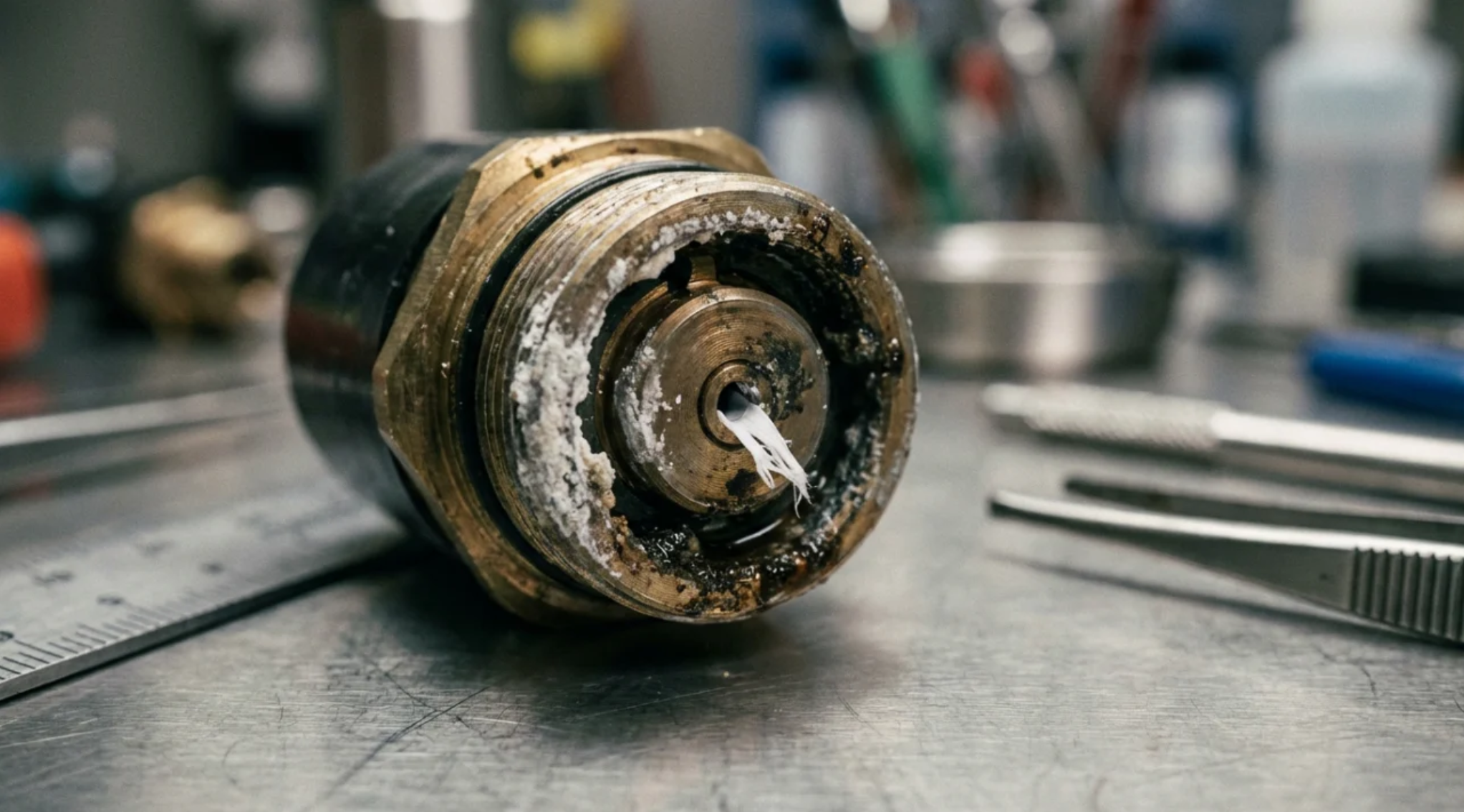
The second enemy is contamination. A small piece of scale or teflon tape lodged in the guide tube blocks the plunger's movement. I also often see errors in the duty cycle selection. If the valve is designed for short-term operation, but you keep it energized for hours, overheating is inevitable. And, of course, there are the usual installation errors: inverted valves, cables without strain reliefs, and a lack of grounding.
If you are dealing with burnt-out components, make sure to select a precise match. Browse our catalog of robust
Common Failure Modes (And How to Spot Them)
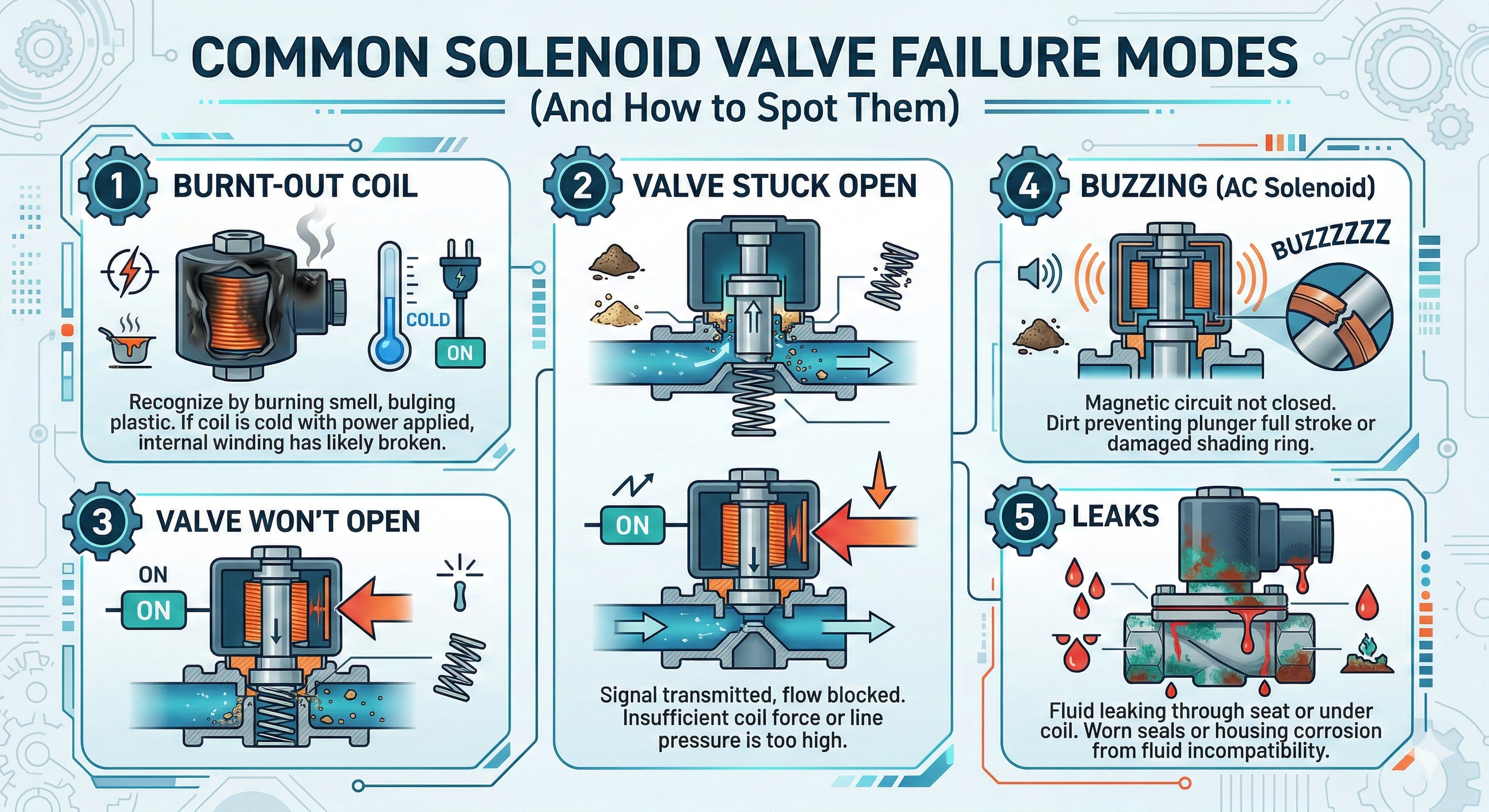
In my practice, common solenoid valve problems manifest themselves in five main forms:
1. A burnt-out coil. You'll recognize this by a characteristic burning smell or bulging plastic. If the coil is cold when power is applied, the internal winding has likely broken due to thermal expansion.
2. The valve is stuck open. In this case, the solenoid valve is stuck open even after power is removed. This usually means debris has gotten under the seal, or the return spring has broken;
3. The valve won't open. The signal is transmitted, but the valve not opening – flow is blocked. Either the coil isn't generating the required force, or the line pressure is higher than the solenoid can handle;
4. Buzzing. If an AC solenoid is buzzing, it means the magnetic circuit is not closed. Either the plunger hasn't reached the stop due to dirt, or the shading ring (the small copper ring on the end of the core) is damaged;
5. Leaks. Fluid is leaking through the seat or from under the coil. This is a sign of worn seals or corrosion of the housing caused by incompatibility between the valve materials and the operating fluid.
Direct Acting vs Pilot Operated – Different Failure Patterns
When diagnosing a valve, it's important to understand what type of device you're dealing with. When examining industrial valve failure modes, I noticed a clear distinction between direct-acting and pilot-actuated valves.
Direct-acting valves typically suffer from mechanical seat wear and coil burnout, as they require a lot of force to open. If something breaks in such a valve, it's usually visible to the naked eye: a damaged stem or a seal corroded by cavitation.
Pilot-operated valves are more complex. They rely on the energy of the medium, so their main problem is clogging of the tiny pilot orifice. If this orifice is clogged, the main valve (piston or diaphragm) will not move, even if the coil is operating perfectly. They are also extremely sensitive to pressure loss in the line: if the inlet and outlet pressures are nearly equal, the valve will close on its own, which is often mistaken for an electrical fault.
For applications where you need robust performance regardless of pressure drops, direct-acting valves are the best choice. We highly recommend exploring the
Step-by-Step Troubleshooting Guide
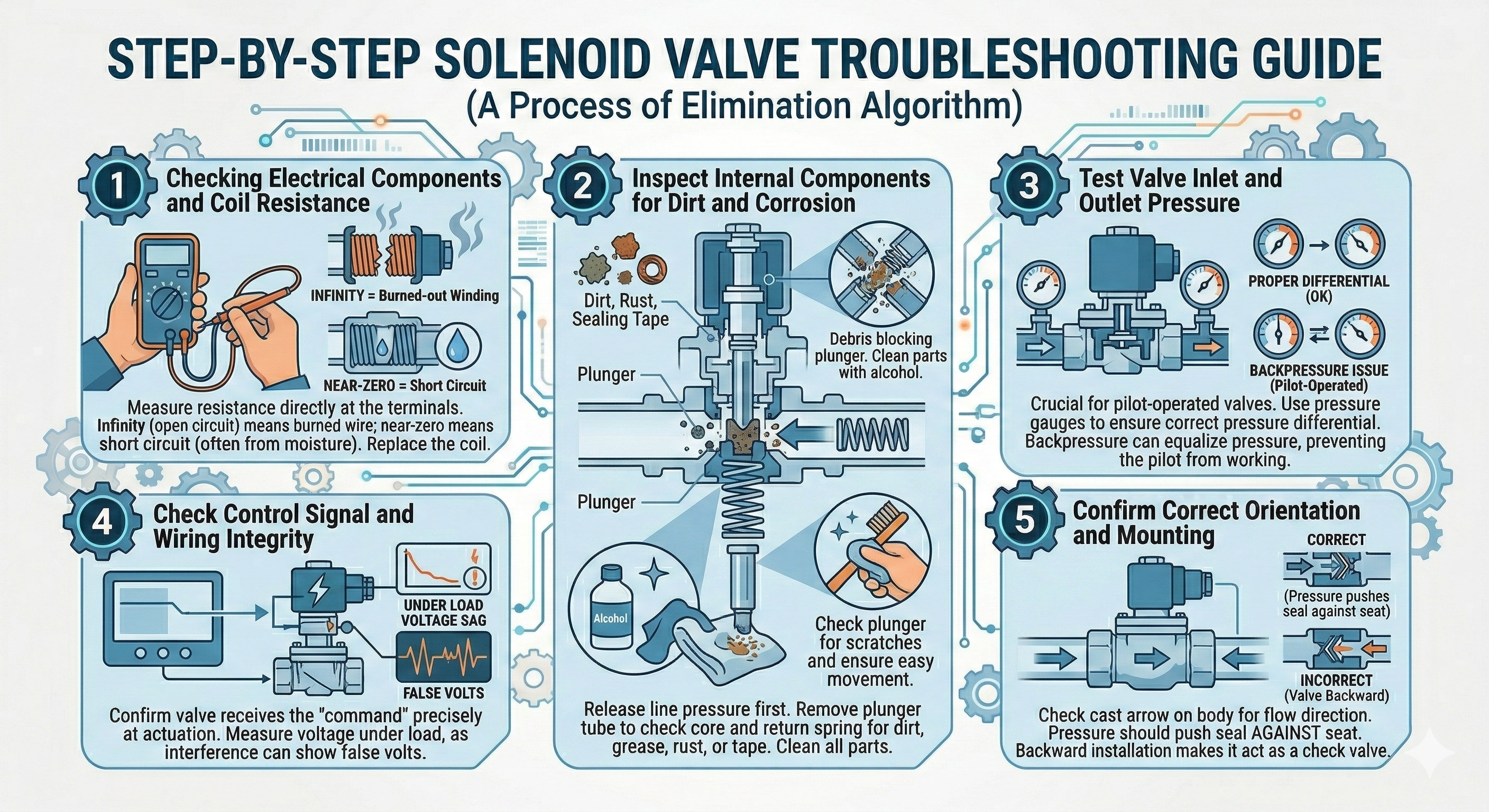
If the system stalls, don't panic. Professional solenoid valve troubleshooting is a process of elimination. Here's my algorithm:
1. Checking the electrical components and coil resistance. First, I take out a multimeter and measure the winding resistance directly at the terminals. If the meter reads "infinity" (an open circuit), the thin copper wire inside has burned out or snapped due to vibration, and the coil needs to be replaced. If the resistance is close to zero, there's a short circuit, which is often caused by moisture getting inside the connector;
2. Inspect the internal components for dirt and corrosion. If the electrical system is OK, it's time to get inside, after releasing the pressure from the line. Loosen the retaining nut and remove the plunger tube to inspect the core and return spring. I often find a "mush" of old grease, rust, or pieces of sealing tape blocking the plunger's movement. Clean all parts with alcohol, check for deep scratches on the plunger, and make sure it moves easily in the tube;
3. Test the valve inlet and outlet pressure. This is the most important step for pilot-operated valves, which often behave unpredictably. Use pressure gauges to ensure that the pressure differential between the inlet and outlet matches the specifications for your device. If the outlet pressure is almost equal to the inlet pressure (for example, due to back pressure in a long line), the pilot valve will not be able to create the necessary force differential to lift the piston and will remain closed;
4. Check the control signal and wiring integrity. Sometimes the valve operates perfectly, but simply isn't receiving the "command" from the controller or relay. Check the voltage at the connector precisely at the moment of actuation, as interference can indicate volts on the tester, but under load, the voltage will sag;
5. Confirm the correct orientation and mounting position. I once had a technician spend a day troubleshooting the problem, only to discover that the valve had simply been installed backwards, confusing the inlet and outlet. Check the arrow on the body to see if it indicates the flow direction, as most valves operate as check valves – the pressure should push the seal against the seat, not force it out.
Preventive Measures That Actually Work
I always tell my customers: the best repair is the one that wasn't needed. High-quality solenoid valve preventive maintenance saves thousands in downtime.
First, install Y-strainers in front of each valve. This costs pennies compared to the cost of replacing a stainless steel valve (For high-quality filtration and fluid control solutions, check out our
Another thing I would suggest is that you "click" open and closed valves not in use at regular time periods, such as a few times per month. If a valve has not been in use for 6 months, it will often become stuck to its seat due to dirt build-up and dust accumulation. If you click the valve once a month to clean the seat and check the mechanism, you can avoid this situation.
Real Examples from the Field
To further illustrate my point, I like to provide examples. At a dairy facility, coils on the filling line frequently caused burnout. We were determined that the coils were receiving power 95% of the time from the solenoid valves. By adding timers to disconnect power to the coils between fills, as well as adding a radiator on the valve bodies, we were able to solve this issue entirely.
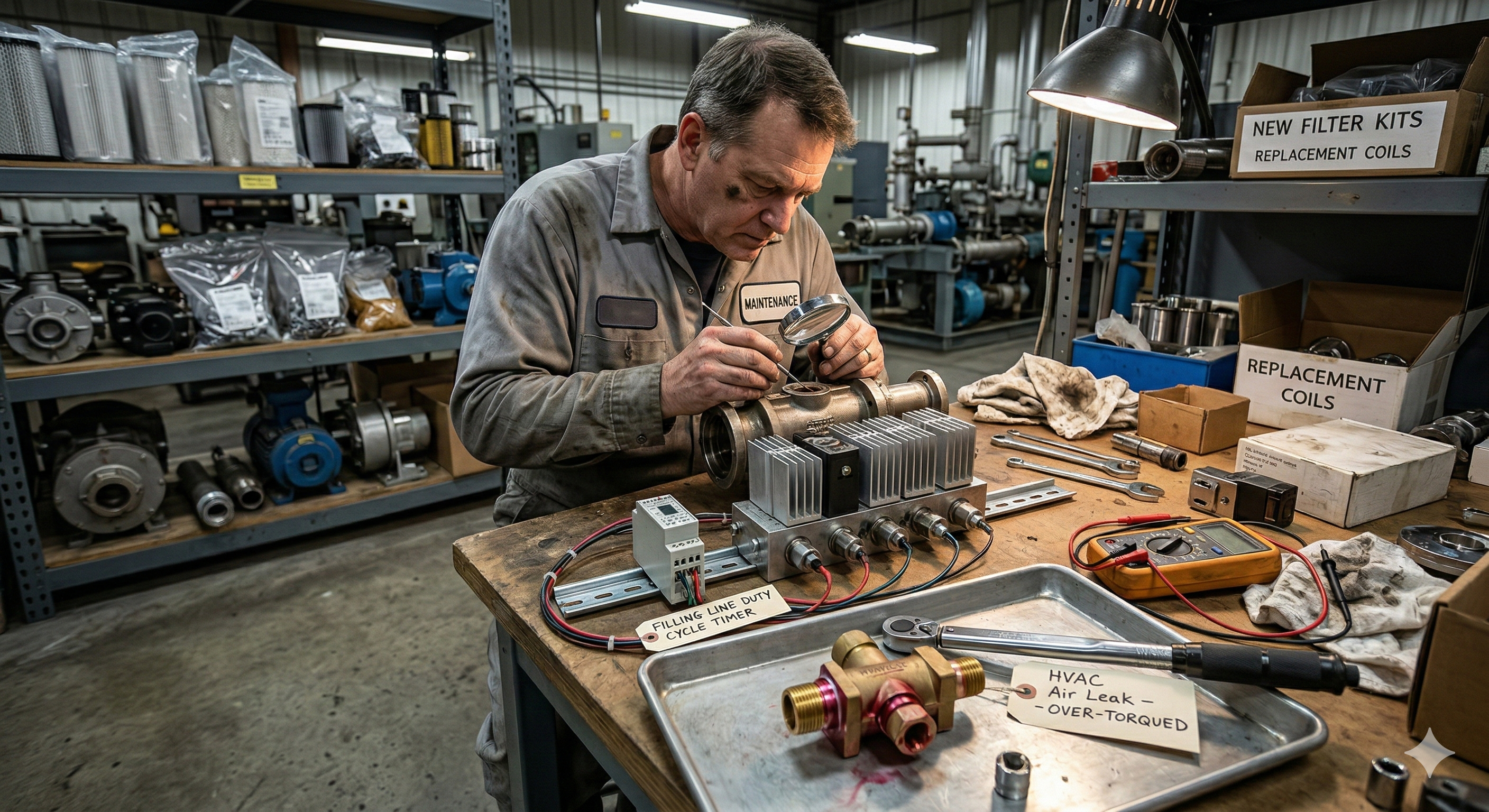
As another example, I had a client who had an air leak in their HVAC system that was traced back to a valve that was leaking. We discovered that during installation, the technician had over-torqued the fittings and caused micro-deformities of the valve body. A prime example of how hurry up equals slow down or damage done.
Lastly, my most interesting example was a large water main where the pilot valve failed. Everyone blamed the electrical system, but it turned out that a piece of rust from a previous pipe had entered the pilot hole. Cleaning out the rust and installing new filters corrected the issue in 15 minutes, even after the unit had been out of service for 2 days.
Final Takeaways from the Field
If your solenoid does not function after its first week of use, do not assume it is a manufacturing defect; instead, check to see if you have made a mistake when installing the solenoid or if you selected the wrong model. Always keep a multimeter close at hand since diagnosing faults by sight should never be relied upon within an automation system.
If you follow this approach, your solenoid valve repair guide will turn into a short, "tested, everything works" note. Don't skimp on filters or ignore installation requirements – and your solenoid will reward you with years of reliable service.
At Eltra Trade, we supply premium industrial valves and pneumatics. Explore our full range of
FAQs About Solenoid Valve Failures
1. Why does my solenoid valve buzz or chatter?
Most likely, the plunger isn't pressing firmly against the stopper due to dirt inside, or there's insufficient voltage being supplied to the AC coil.
2. Can I replace a 24V coil with a 12V one?
No, this will immediately burn out the winding or damage the power supply. Always observe the voltage rating.
3. What causes a solenoid valve to get hot?
A slight increase in temperature (up to 50-60 degrees Celsius) is normal. Severe overheating indicates a jammed mechanism, excessive voltage, or an incorrect duty cycle.
4. How often should solenoid valves be maintained?
In clean systems, an annual inspection is sufficient. In dirty or sensitive areas, I recommend checking the filters and coil resistance on a quarterly basis.
5. What’s the difference between valve failure and control signal loss?
If the multimeter shows voltage at the contacts, but the valve remains silent, the solenoid is at fault. If there is no voltage, check the cable or controller for the problem.