Why Solenoid Valves Buzz — Electrical and Mechanical Causes Explained (Engineer’s Guide)
27.03.2026
Over the years working in factories, I've learned to identify equipment problems by sound even before opening the control cabinet. A loud humming solenoid valve is like a cry for help to me. If the valve starts "singing," it means the coil is overloaded, and only a few hours remain before it burns out completely or the entire line jams. In this guide, I'll explain why your system has suddenly become noisy and how to stop solenoid valve buzzing before it starts smoking.
Today you'll learn:
What solenoid valve buzzing actually means (and why it matters);
The most common causes: low voltage, wrong coil type, debris, misalignment;
Why AC solenoid valves buzz more than DC versions;
How buzzing leads to overheating, coil burnout, and stuck valves;
Step-by-step diagnosis + fixes I use in the field.
What Does It Mean When a Solenoid Valve Buzzes?
In most industrial systems, this sound is abnormal. If a solenoid valve is noisy, it almost always indicates an air gap in the magnetic circuit. When you hear a solenoid valve buzzing, it is important to distinguish the nature of the sound:
Humming. A slight humming sound, often normal for high-power AC coils;
Buzzing. A loud, rattling sound. The plunger physically vibrates, striking the stopper 50-60 times per second;
Chattering. A rhythmic on/off action, often associated with pressure or control signal instability.
№1 Reason Solenoid Valves Buzz – Low or Unstable Voltage
When a mechanic comes up to me and asks, “Why does my solenoid valve buzz?” the first thing I do is pull out my multimeter.
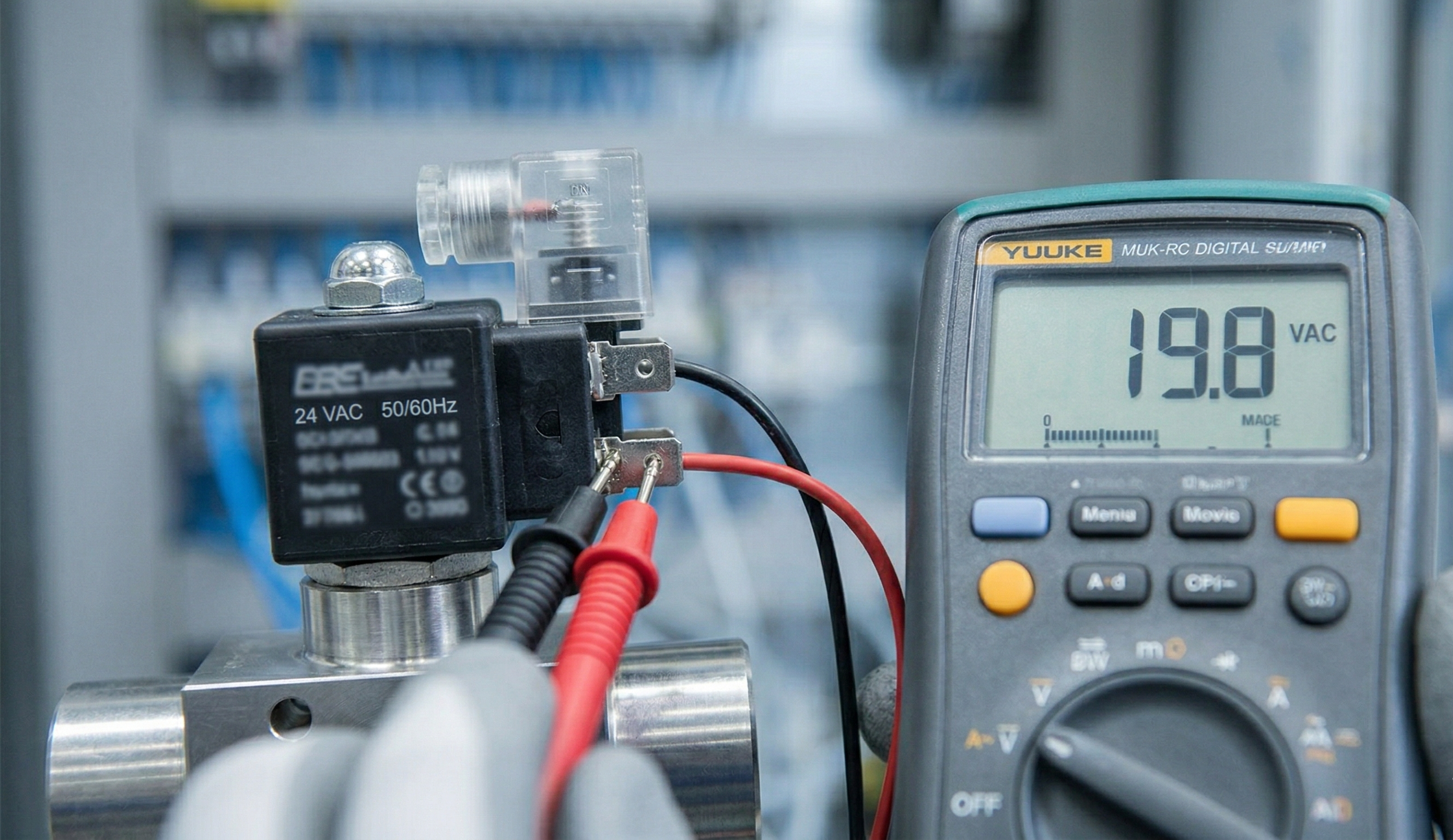
Magnetic force is directly related to voltage. If the voltage is insufficient, the field strength is insufficient to overcome the spring resistance and the ambient pressure fully. The plunger "freezes" in an intermediate position and vibrates wildly.
Typical culprits in my experience:
Long cable runs. The long distance from the cabinet to the valve causes a voltage drop. The coil receives 15-20% less voltage than the power supply delivers;
Undersized transformer. A weak transformer "sags" when multiple loads are turned on simultaneously in the system;
Loose terminals. Loose screws on the terminals or corrosion create excess resistance and a power drop;
Overloaded 24VDC power supply. An overloaded power supply produces a pulsating current, which causes the solenoid valve vibrating, especially with DC.
AC vs DC Coils – Why AC Valves Buzz More Often
The physics of the process in AC and DC coils are different. AC solenoid valve buzz is a common occurrence because the magnetic field reverses direction 50 or 60 times per second. When the sine wave passes through zero, the magnetic force disappears. To prevent the plunger from bouncing at this point, engineers developed a shading ring – a small copper ring on the end of the fixed stop. It creates a phase shift while maintaining the residual field.
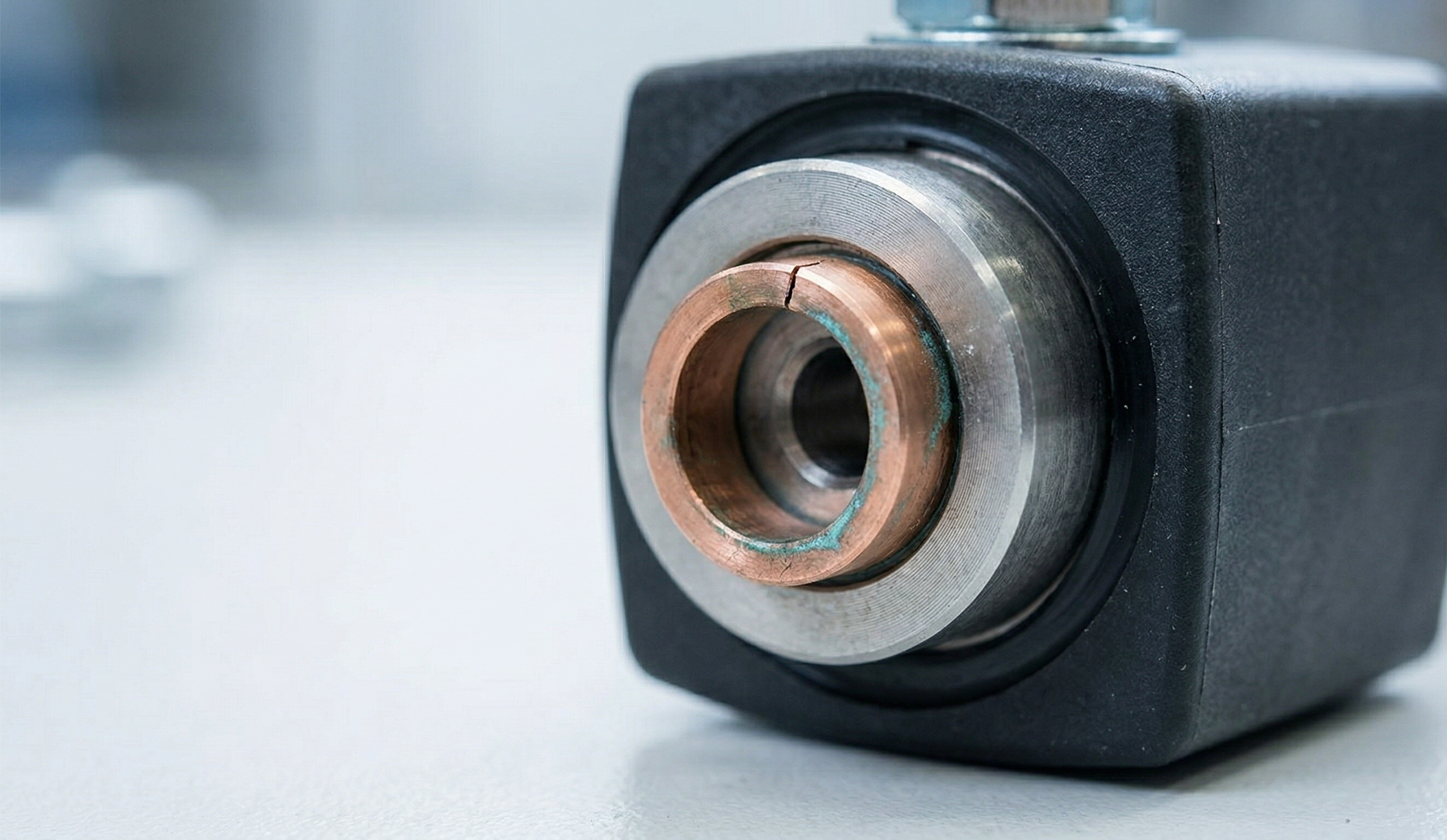
If this ring cracks or oxidizes, the valve will become a jackhammer. DC valves don't have this problem, so they operate much more quietly. If your solenoid valve is vibrating on the DC line, look for problems in the power supply, pulsation, or mechanical jamming.
Looking for a reliable pilot-operated valve? The
Mechanical Causes of Buzzing (That Most People Miss)
Anything that prevents the plunger from physically contacting the upper stop creates an air gap. An air gap in the magnetic circuit is a direct route to vibration and overheating: 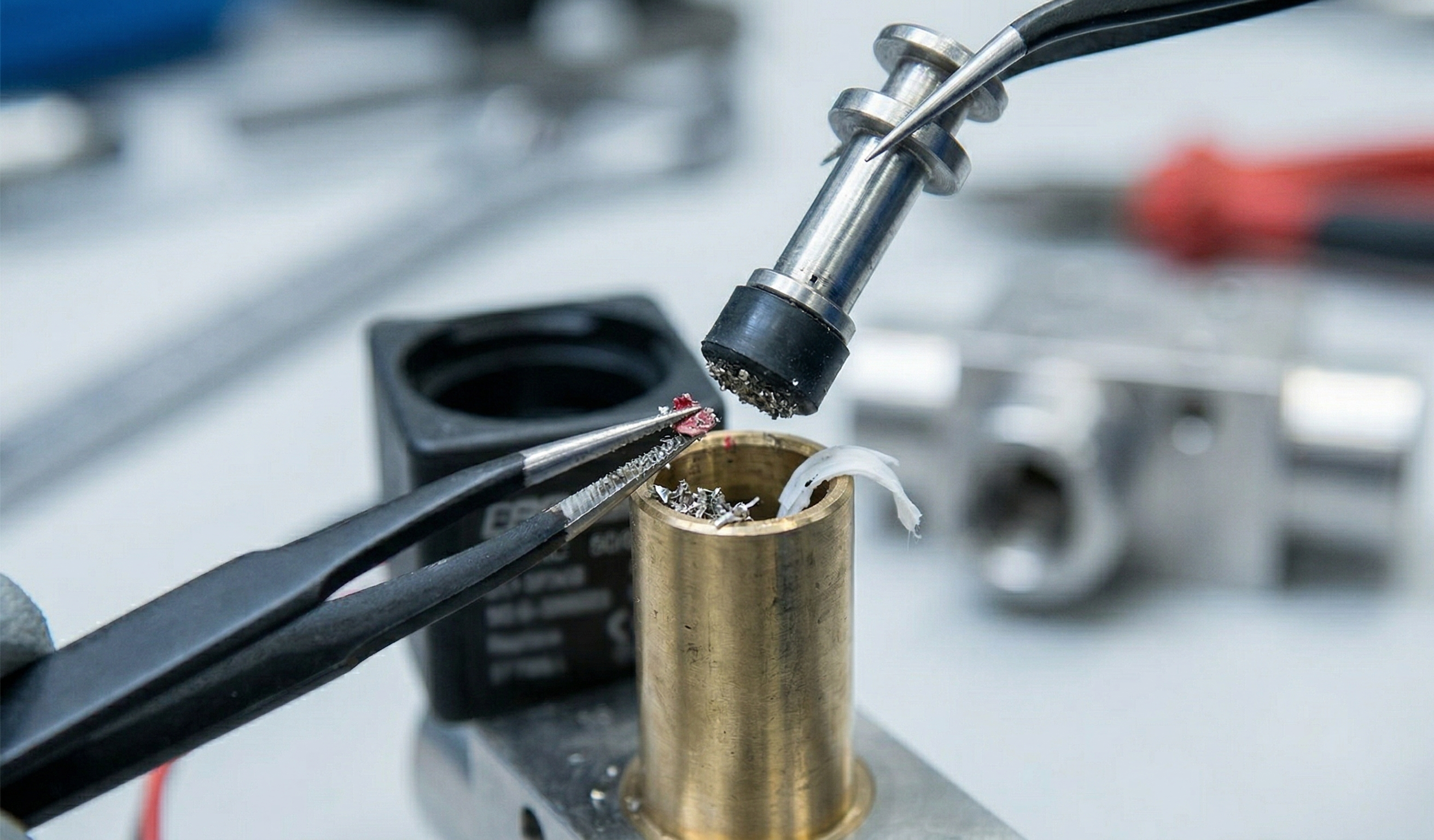
Debris in the plunger tube. When dirt, scale, or tape accumulates in the plunger tube, there is a 0.1 mm (0.004 inch) gap between the plunger and the upper stop that interrupts magnetic flux and causes the solenoid valve coil buzzing;
Worn internal components. A weak or sagging return spring and/or a stiff rubber end of the plunger result in excessive movement (play), which will result in vibration when running on AC;
Incorrect coil mounting. Mounting the coil upside down holds a lot of sludge in the cup and interferes with the force of gravity, preventing proper plunger seating into the valve body.
Buzzing vs Chattering – How to Tell the Difference
The difference in sound allows you to instantly distinguish between an electronic problem and a system pressure failure:
Buzzing. This is a monotonous vibration caused by the plunger not seating in the stopper; the noise is often confused with regular solenoid valve humming, although it is much louder;
Chattering. A rhythmic knocking sound, similar to a burst of fire, is a symptom of solenoid valve chattering due to pressure surges or relay chatter;
Identifying the root cause by sound. If you don't know how to stop a solenoid valve buzzing, remember: buzzing is a coil problem, while chattering is a system problem.
Pilot-Operated Valves Buzz for Different Reasons
Pilot-operated valves (indirect-acting) operate differently: the magnetic field does not lift the main stem, but only opens a tiny channel (the pilot). The pressure of the medium itself does the main work of opening the diaphragm.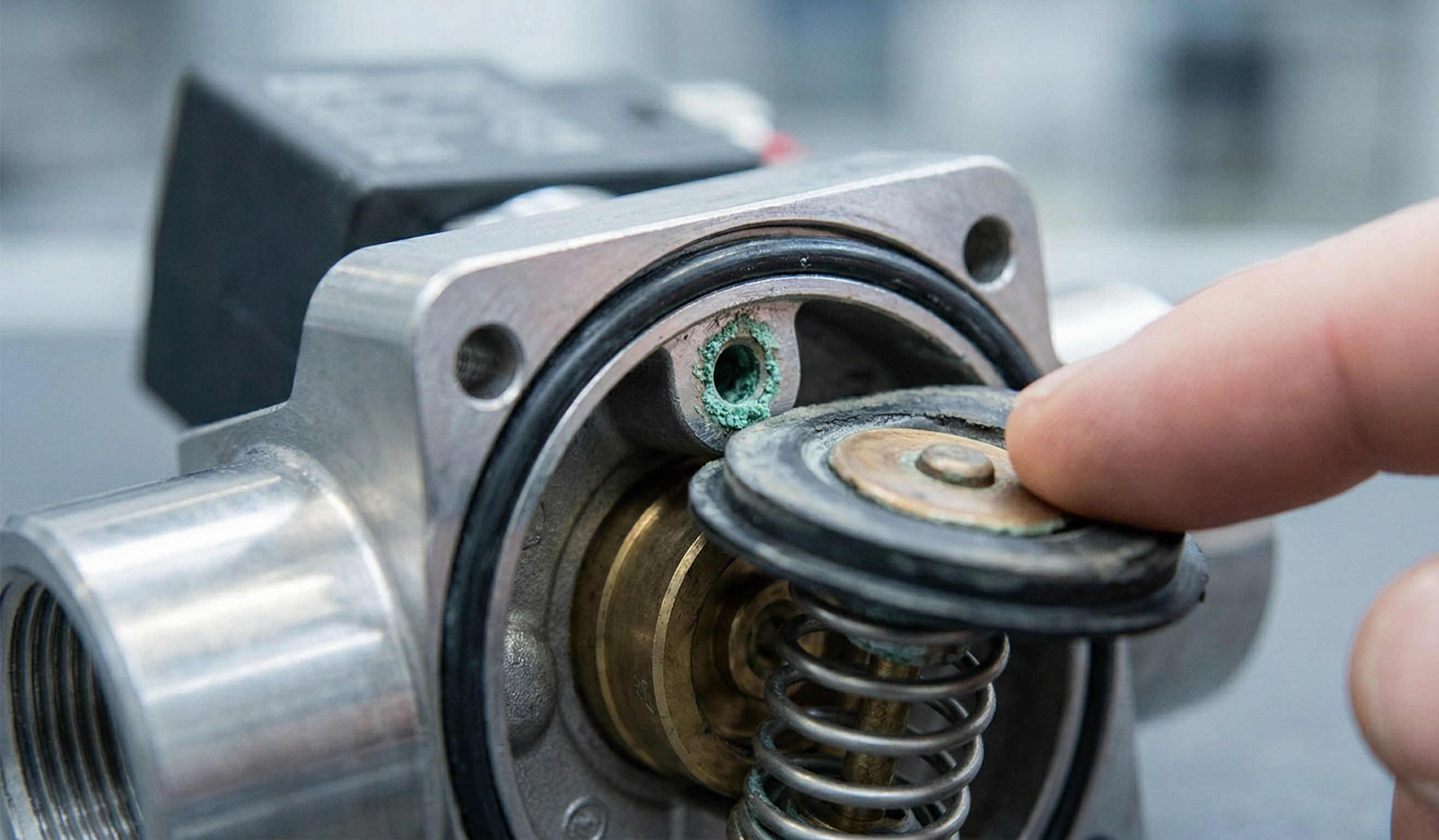
Most common causes:
The system pressure is too low. Pilot valves require a delta pressure (from 0.5 bar) to lift the diaphragm. If the pressure is insufficient, the diaphragm "freezes" in the mid-position, causing vibration that is transmitted to the plunger;
Clogged pilot orifice. The narrow pilot bore easily becomes clogged with dirt or scale, causing the pressure behind the diaphragm to equalize jerkily. This disrupts the balance of forces in the housing and causes mechanical resonance when the solenoid attempts to retain the plunger;
Sticking or worn diaphragms.Over time, the rubber hardens or becomes coated with a coating, preventing the diaphragm from moving freely. This prevents the plunger from reaching the stop, causing the valve to hum when cold and only begin to operate after warming up or manually shaking it.
Looking for a reliable pilot-operated valve? The
Step-by-Step Diagnosis (How I Troubleshoot Buzzing in the Field)
When I'm called to a site, I go through the following checklist:
Check coil voltage and coil type (AC or DC). Initially, I will verify the markings on the coil against what is coming out of the cabinet. Mistakes can happen when replacing parts. So much so that it has happened more than you would expect;
While energized, measure the voltage at the coil. I will use a multimeter and measure the voltage at the terminals while under load. The voltage could show normal without any load, then drop when there is current flowing;
Check coil temperature after 5 to 10 minutes. I will carefully check the temperature of the coil. If the coil is hot enough that I cannot place my hand on it, there is an issue with the plunger being stuck, and the coil is overloaded;
Inspect the wiring terminals, connectors, and ground. I will ensure all screws at the DIN connector are tightened and check the contacts for oxidation, which can rob power;
Remove the coil and manually check the movement of the armature. I will remove the coil and then, with my finger or a screwdriver, ensure the plunger moves freely without binding;
Check the inlet strainer and valve internals for debris. I disassemble the valve and clean out any dirt, scale, or bits of PTFE tape from the cup that could prevent the plunger from fully seating;
Verify the pressure differential (especially for pilot valves). I check the pressure gauges to ensure there's enough pressure in the system to operate the diaphragm; otherwise, the valve will simply vibrate;
Test valve on bench if needed. If everything appears normal in the line, I remove the valve and test it on a bench using a known-good power source.
Fixes That Actually Work (Not Just “Replace the Valve”)
Some people replace the entire valve assembly; however, with little effort, many issues can be resolved as follows:
Tighten all terminal connections and check fora solid voltage supply to the valve. I make sure that all contacts are tight and that the power supply provides enough voltage under all load conditions to eliminate possible voltage dips;
If the rings on the solenoid are cracked, replace them with a new core/coil. The only thing that will stop a solenoid valve from buzzing will be a new core/coil;
Clean the plunger tube and change any worn seals. I clean out any dirt in the tube and do not replace the seals (they will not hold);
Install proper upstream filtration. I put a screen in front of the valve to keep small debris from interfering with the valve closing properly;
Change to a DC coil. If the valve is part of a noise-sensitive application, I just change to 24V DC power since that is a noise-free power source;
Add surge suppression to the valve or use a clean power supply if PWM is present. If the valve operates on PWM, I install a diode protection scheme to eliminate electrical noise and vibration.
Preventing Solenoid Valve Buzzing in New Installations
To avoid solenoid valve troubleshooting later, do it right from the start:
Correct coil selection. I always double-check the voltage, line frequency, and duty cycle to ensure the coil matches the actual operating conditions;
Avoid cheap transformers and weak power supplies. I don't skimp on power supplies and choose units with ample power to avoid sags when turning on a group of valves;
Use strain relief and proper cable routing. I always secure the cable and use sealed entries to prevent vibration and strain from loosening the contacts in the connector;
Install strainers/filters upstream. I always install a mesh filter before the valve to protect the precision mechanics from scale and debris from the pipeline;
Don't over-tape threads. I wrap the PTFE tape carefully, leaving the first few turns bare to prevent any Teflon from getting inside the plunger tube.
Real-World Examples from the Field
Here are examples from my experience where one small detail cost an entire day of downtime.
- HVAC water ski
At this facility, a valve was buzzing due to a voltage drop on a 60-meter line; the problem was solved by simply adjusting the trimpot on the power supply to 26V.
- Compressed air line
I cured the constant buzzing by cleaning the cup where metal shavings had become lodged, preventing the plunger from engaging the stopper.
- Steam system
The valve started to hum and melt due to an incorrectly selected coil, which was not designed for high steam temperatures and continuous operation.
- Pilot valve on the irrigation system
Here, the valve vibrated every time the pump started until I adjusted the pressure switch to provide the diaphragm with the required starting thrust.
FAQs About Solenoid Valve Buzzing
1. Is it normal for an AC solenoid valve to hum?
A slight, barely audible hum is normal for AC power, but any loud buzzing is a sign of a malfunction.
2. Why does my solenoid valve only buzz occasionally?
This is usually caused by fluctuating voltage drops in the line or temporary pressure surges in the mains.
3. Can low voltage damage a solenoid coil?
Yes, low voltage prevents the plunger from engaging the stopper, causing the current to remain at a peak level and quickly burn out the winding.
4. Why does buzzing cause overheating?
When buzzing, the magnetic circuit is not closed, which dramatically reduces inductive reactance and causes the coil to consume excess power.
5. Will switching from AC to DC stop buzzing?
Yes, switching to DC eliminates the vibration, as the DC magnetic field is stable and does not cyclically cross zero.
6. Why does a pilot valve buzz on startup?
This occurs when the pressure in the system increases too slowly, and the diaphragm does not have enough force to immediately and clearly take the working position.