Baumer HOG Heavy-Duty Encoders: Features and Where They Are Used
19.11.2026
Units used in metallurgical plants, excavators, cranes, and wind generators work under complex conditions. Because of this, standard industrial sensors cannot be used in practice. The reason is that they stop working almost immediately in these conditions due to high vibrations, mechanical stresses, electric shaft currents, destructive dust and moisture, and very high electrical interference on long lines. In this situation, it's necessary to use super-strong sensors specifically made to work in such extreme conditions.
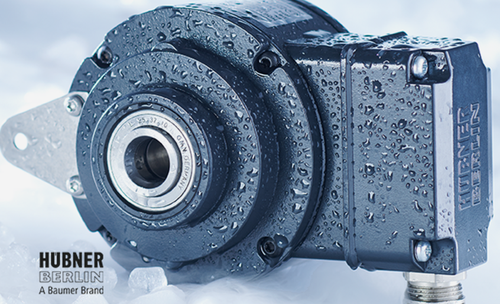
Baumer HOG encoder series contains rotational sensors of the latest generation produced by the well-known Hübner company. These encoders can measure the speed and position of different mechanisms like electric motors and generators. These encoders are made to be very robust and therefore can be used in harsh conditions. Such encoders can work at high speeds and over distances of more than 100 meters. To select the right encoders, it's important to analyze all important mechanical and electrical parameters of the equipment, since only considering the pulse count is not enough.
What Is a Baumer HOG Encoder?
What is a Baumer HOG encoder? It is a rugged, industrial-grade incremental encoder (HeavyDuty) designed to mount directly onto a hollow shaft. These units are engineered for heavy-duty drive applications in sectors such as metallurgy, mining, crane operations, and wind energy.
Most models in the HOG family feature a hollow shaft and mount directly onto the protruding end of an electric motor shaft. Versions with a solid shaft are designated as the POG series. These encoders are typically installed on the non-drive end of large machinery shafts, as well as on intermediate shafts within mechanical transmission systems. The “HOG” designation originates from the historical naming convention used by the Hübner factory.
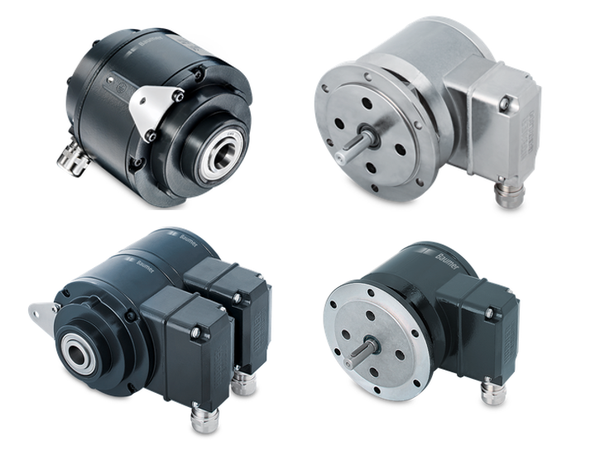
You can explore the available versions and select the right HeavyDuty incremental encoder by consulting the dedicated Baumer incremental encoders catalog.
Key Design Features of HOG Heavy-Duty Encoders
The HOG product line is distinguished by a suite of engineering solutions designed to eliminate the primary causes of sensor failure in heavy-duty industrial equipment.
Robust mechanical design
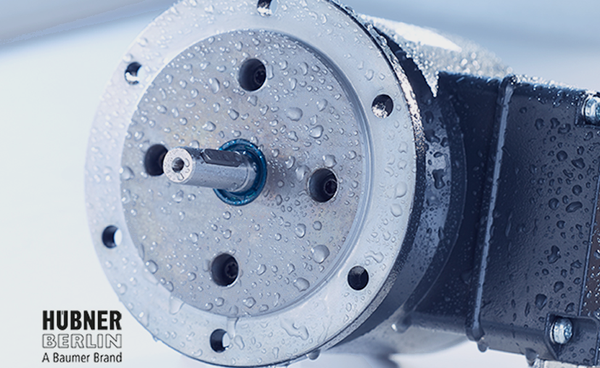
The internal architecture of these devices utilizes a dual-bearing support configuration, wherever the housing dimensions allow. The housings are constructed from durable cast aluminum, with stainless steel versions available for use in aggressive environments. These units offer exceptional resistance to shock and vibration; for instance, the HOG 10 encoder is specified to withstand mechanical shocks of up to 300 g (with a 6 ms duration) and vibration loads of up to 20 g across a frequency range of 10-2,000 Hz. The device is also engineered to endure significant shaft loads: up to 450 N in the axial direction and up to 600 N in the radial direction.
Insulated and hybrid bearings
High-power electric motors controlled by variable-frequency drives (VFDs) can generate parasitic shaft currents. When these currents pass through the steel bearing balls of an encoder, they cause electrical erosion of the raceways, degrade the lubricant, and ultimately destroy the bearing assembly. To prevent this, a heavy duty hollow shaft encoder with specialized protection is employed.
Such devices incorporate dielectric shaft insulation or hybrid bearings featuring ceramic balls. In the HOG 10 model, the dielectric strength of the shaft insulation reaches 2.8 kV. Additionally, grounding brushes can be installed to dissipate static charges.
Expert note. Bearing damage from shaft currents is a common cause of early encoder failure on inverter-driven motors. This is one of the main reasons heavy-duty encoders are used instead of standard ones.
Signal transmission over long cables
For reliable signal transmission, high-power HTL-P (Power Linedriver) and TTL/RS422 output stages are used, which always include the generation of inverted signals. The output section produces signals for channels K1, K2, and the zero pulse K0 (Baumer’s designation for phases A, B, and Z), along with their inverted counterparts. This robust Baumer heavy duty encoder ensures distortion-free signal transmission over distances of up to 350 m (for HTL-P) and 550 m (for TTL) at a frequency of 100 kHz. In terms of electromagnetic compatibility, the HeavyDuty units can withstand electrical fast transients (bursts) of up to 4 kV.
Environmental protection
The devices feature an IP66-rated enclosure (for the HOG 10 series) equipped with special sealing rings that provide protection against moisture, dust, and condensation – even in tropical environments. The standard operating temperature range is -40 to +100 °C; for more extreme conditions, versions with integrated internal heating are available. For marine vessels and offshore platforms, models with anti-corrosion coatings are offered, as well as versions that meet ATEX explosion-proof standards.
Monitoring and redundancy
Certain models are equipped with the proprietary Enhanced Monitoring System, which continuously monitors the signal and triggers an error status output in the event of a failure. For critical drive applications, a redundancy option is available: two independent optoelectronic measuring systems are housed within a single enclosure. It is also possible to combine the encoder with a tachogenerator or a centrifugal speed switch on a common shaft.
Main Baumer HOG Encoder Families
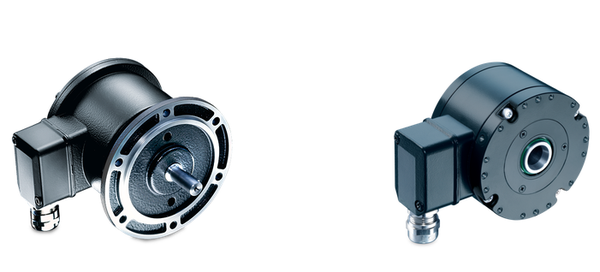
The product range encompasses several main series, which differ in terms of shaft type, dimensions, and compatibility with other devices. The offerings from the classic manufacturer are divided into the following Baumer Hübner encoder lines:
Family | Shaft | Pulses per revolution | Main point |
HOG 10/POG 10 | Hollow ø12-20 mm or cone (HOG); solid with EURO flange B10 (POG) | 300-5,000 | Industry standard for large motors, insulation, redundancy option |
HOG 9/POG 9 | Hollow/solid | 300-10,000 | Short mounting depth versions |
HOG 86/POG 86 | Hollow/solid | 500-5,000 | Combinations with speed switches |
HOG 71 | Blind hollow shaft (e.g., 12 mm bore) | Model-dependent | Compact design, available in the ELTRA TRADE catalog |
HMG 10/PMG 10 | Hollow/solid | Absolute or programmable versions | For applications needing absolute position |
The HOG 9 series models feature a reduced mounting depth, which simplifies their integration into confined spaces. The HOG 86 series allows for the assembly of hybrid units that include mechanical speed switches. POG 10 series encoders are equipped with a solid shaft and a standard European EURO B10 flange. The HOG 71 series offers a compact blind hollow shaft design.
The catalog number structure encodes all specifications in a precise manner. For example, the code combination “HOG 71 DN 1024 TTL 12H7 is interpreted as follows: HOG 71 series, inclusion of inverted signals (DN), a resolution of 1024 pulses per revolution, a TTL/RS422 output interface, and a 12 mm diameter blind hollow shaft with an H7 tolerance.
Where Baumer HOG Encoders Are Used
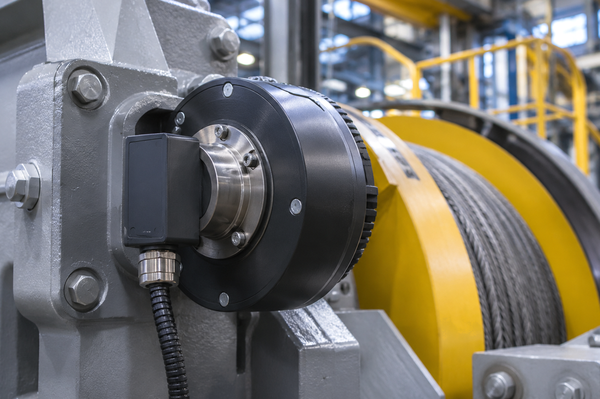
Due to their high reliability, these sensors are used in industries with the most demanding operating conditions:
- Metallurgy. A heavy-duty encoder for rolling mills provides speed feedback for the main drives, coilers, and coiling drums. The high vibration resistance of the housing prevents malfunctions during the continuous impact loads typical of hot-rolling processes;
- Lifting and handling equipment. A crane encoder is installed on hoist winches, trolley travel mechanisms, and crane bridges. Continuous monitoring of shaft rotational speed ensures precise positioning of multi-ton loads and supports anti-skew protection systems;
- Mining industry. These devices monitor the speed of drives for mine hoists, jaw crushers, and main belt conveyors. An IP66-rated, protected housing prevents abrasive dust and moisture from entering the sensor’s internal components;
- Wind energy. A specialized wind turbine encoder tracks the rotational speed of the generator rotor within the turbine nacelle. Integrated shaft insulation protects the device’s bearings from damage caused by high-frequency currents;
- Power generation. Sensors are installed on large feed pumps, draft fans, and turbogenerators at thermal power plants. The reliable transmission of differential signals over distances of hundreds of meters ensures immunity to interference near high-power electrical equipment;
- Pulp and paper industry. These devices monitor the rotation of heavy drying and calendering rolls. A wide operating temperature range allows the sensors to function effectively in environments characterized by high humidity and constant heat;
- Marine transport. Water-resistant models are used to control marine traction winches and thruster positioning systems. The housing features a special anti-corrosion coating that withstands exposure to harsh, salty seawater.
What to Check Before Ordering a HOG Encoder
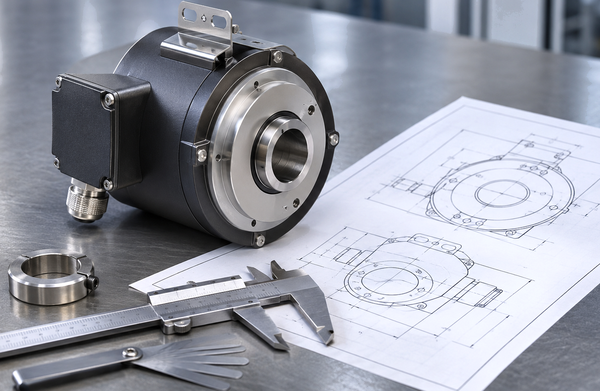
- Shaft type. Blind hollow shaft, through-hollow shaft, tapered shaft, or solid shaft (POG);
- Mounting diameter. Precise match between the bore/shaft diameter and the motor shaft;
- Resolution. Required number of PPR;
- Output signal. Compatibility of the output stage type (HTL-P or TTL/RS422);
- Supply voltage. Range of 9-30 VDC or a fixed 5 VDC;
- Connection type. Terminal box (radial or axial) or an industrial connector;
- Torque support. Type of anti-rotation bracket used to compensate for runout or vibration;
- Bearing insulation. Presence of an insulated shaft or an encoder with insulated bearings for use with VFDs;
- Environmental specifications. IP protection rating, temperature range, and corrosion-resistant design;
- Additional options. Redundant outputs, an EMS, or integrated heating.
Expert note. When replacing a HOG encoder, the full type designation from the label is the most reliable starting point. Two HOG encoders with the same pulse count can differ in output, bore, voltage, and connection.
Installation and Maintenance Tips
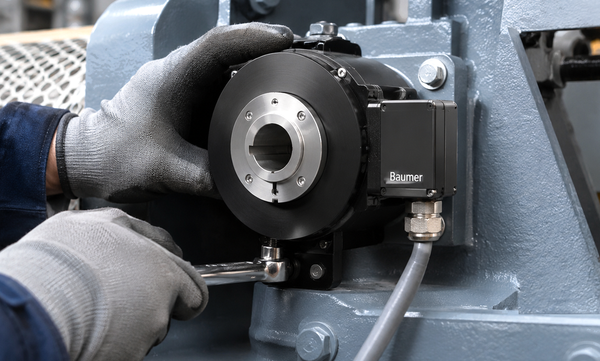
- Check the motor shaft for radial runout and cleanliness before mounting the encoder. Excessive runout leads to accelerated bearing wear and distortion of the output signal;
- Tighten the clamping ring components to the specified torque. Insufficient tightening causes shaft slippage, while excessive force deforms the internal structure;
- Install the torque arm without pre-tension to avoid exerting bending forces on the bearings. The free play in the compensator accommodates axial play and shaft runout without transferring mechanical stress to the housing;
- Use a shielded twisted-pair cable and route it separately from power lines. Properly grounding the shield at both ends ensures protection against electromagnetic interference;
- Verify the integrity of the rubber seals on the terminal box after any maintenance. A damaged or misaligned gasket can allow moisture ingress, leading to the failure of the device's internal circuit board;
- Monitor the condition of shaft grounding components on motors equipped with VFDs. Worn-out carbon brushes negate protection against bearing currents and create a risk of electrical erosion.
Common Mistakes When Selecting or Replacing HOG Encoders
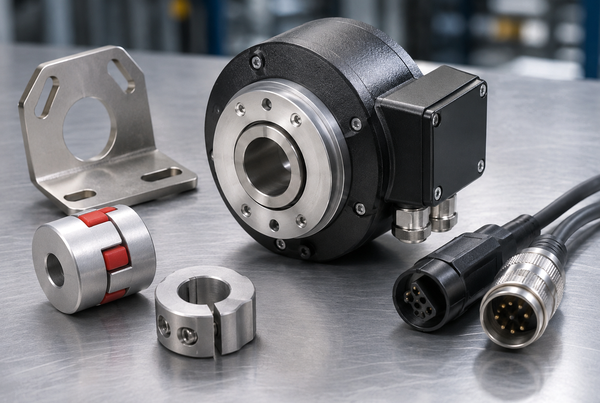
The following errors are frequently made when selecting or replacing equipment:
- Choosing a sensor based solely on the number of pulses while ignoring the output signal type. Disregarding the output type leads to incompatibility with the discrete inputs of a controller or control system;
- Confusing HTL and TTL signal levels. Supplying power or a signal at an incorrect voltage level can result in inaccurate pulse registration or damage to input circuitry;
- Errors in selecting the mounting bore diameter or fit tolerances. Dimensional mismatches can make installation impossible or cause runout, potentially damaging the sensor shaft when tightened;
- Using a rigid housing mount instead of a flexible reaction rod. The absence of a compliant element transmits all axial and radial vibrations directly to the bearings, causing rapid wear;
- Overlooking bearing currents when a motor is operated via a VFD. Failing to use insulated bearings or grounding brushes leads to electrical erosion and the destruction of bearing raceways;
- Installing a standard industrial-grade sensor, rather than a heavy-duty class unit, on related drive equipment. Standard devices fail quickly due to intense vibration, mechanical shock, or inadequate housing protection;
- Ordering a replacement without accounting for the specific built-in options of the original unit. The loss of critical features reduces the reliability of the entire system and creates a risk of unplanned production line downtime.
Expert insight. When selecting a Baumer HOG encoder, start with the drive: shaft type and diameter, the input the drive controller expects, and the operating conditions. Then check insulation, cable length, and options such as redundancy or heating. When replacing an existing unit, always work from the full type designation on the label.

Author: Caroline Karol
Chief Sales Officer of Eltra Trade s.r.o.