Top Industrial Applications of Bürkert Solenoid Valves
22.07.2026
In modern automation, the ability to precisely and quickly control liquid and gas flows determines the overall efficiency of a process line. At production sites, industrial solenoid valves serve as the primary actuators that distribute the flow of working fluids. Bürkert has earned an impeccable reputation in industrial automation over decades, creating sensors and actuators capable of operating reliably for millions of cycles. Today, municipal water utilities, chemical plants, food industry giants, and pharmaceutical factories rely entirely on automated fluid distribution circuits to eliminate human error and minimize the risk of accidents. The failure of a single hydraulic unit can halt an entire conveyor, so the reliability of shutoff valves is considered a fundamental element of a company's economic stability.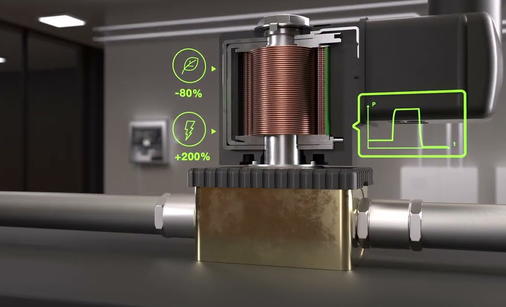
In today's article, we will examine:
- Where Bürkert solenoid valves are most commonly used in industry;
- How different valve types support water, steam, gas, and chemical processes;
- Which industries benefit most from Bürkert automation solutions;
- Real-world examples from manufacturing, utilities, and process plants;
- Practical guidance for selecting the right valve for specific applications.
What Is a Bürkert Solenoid Valve?
Bürkert solenoid valves are electrically operated valves that automatically control the flow of liquids, gases, and steam in industrial automation systems. 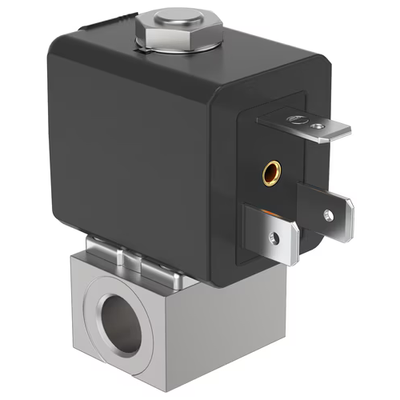
The fundamental operating principle is based on the use of an electromagnetic coil: when voltage is applied to the inductive winding, a magnetic field is created that draws in the plunger, opening or closing the flow passage. Automatic opening and closing occur in fractions of a second, eliminating the need for manual intervention or the installation of complex auxiliary pneumatic lines. Due to their high response speed and reliability, these components are widely used as process control valves in the control circuits of modern enterprises.
Based on their operating principle, these devices are divided into three main categories:
- Direct-acting. The electromagnetic plunger is directly connected to the shut-off element, which opens or closes the seat opening. These models can operate reliably in a pressure range from zero bar to the maximum rated value, making them ideal for vacuum systems, low-flow circuits, and laboratory dispensers. All the force to overcome the fluid resistance comes solely from the magnetic coil;
- Servo-controlled. In these designs, the barometric energy of the pumped medium itself is used to move the diaphragm or piston. The solenoid controls only a tiny pilot channel and creates a pressure difference above and below the control element. They require a minimal pressure differential to operate correctly, but are capable of controlling enormous flows of liquids and gases with minimal electrical power consumption;
- Positive-lift. This type combines the properties of the first two categories. The plunger is rigidly connected to the elastic diaphragm via a spring system. When there is no pressure in the line, the valve opens due to the pure mechanical force of the solenoid. If there is pressure in the system, the device uses it to facilitate the diaphragm's lifting. This ensures reliable operation in gravity-fed systems and in high-pressure networks.
Why Bürkert Solenoid Valves Are Popular in Industrial Automation
Designers and operating engineers worldwide choose products from this German brand for their exceptional operational reliability and long service life, often exceeding tens of millions of operations. The extensive product range includes miniature analytical valves for laboratories and massive flanged devices for heavy industry. The ability of these devices to maintain absolute tightness under sudden pressure changes ensures continuous process stability. The implementation of these components allows for the development of fail-safe industrial fluid control systems for facilities of any complexity.
The developers pay special attention to the design of magnetic coils and mechanical components. Fused epoxy or polyamide insulation reliably protects the winding from aggressive industrial chemicals and extreme temperatures. The devices are also protected from induced electrical interference. Integrated power-reducing electronics deliver a powerful starting current pulse to ensure core retraction, after which the electronics switch the coil to holding mode, gradually reducing power consumption. This saves electricity and completely prevents unwanted heating of the housing and the process medium passing through it. The main pros are:
Performance Drivers | Operational Impact |
Rapid actuation | Superior process regulation |
Extensive media compatibility | Versatile system deployment |
Space-saving footprint | Streamlined field installation |
Outstanding durability | Minimized unplanned outages |
Global industrial approvals | Full regulatory compliance |
Top Industrial Applications of Bürkert Solenoid Valves
Bürkert valves are used across many industries, but some applications consistently benefit from their reliability and process-control capabilities.
Actual implementation statistics show that Bürkert valve applications span thousands of technological processes. Despite the unique requirements of each individual plant, there are several main areas where the use of these devices delivers maximum economic and operational benefits.
Water treatment systems
Water purification, treatment, and distribution require valves that can withstand years of corrosion and oxidizing action. In this area, specialized water treatment valves ensure the smooth operation of all stages of resource preparation: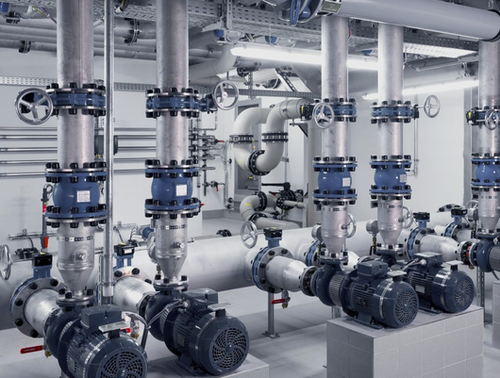
- Water distribution. Automation systems smoothly or discretely control the supply of raw water from wells, distribute flows to clean water storage tanks, and maintain static pressure in municipal or industrial networks;
- Filtration systems. Valves automatically switch flow directions to regularly backwash carbon filters, sand columns, and reverse osmosis membranes;
- Dosing loops. These devices deliver precise amounts of sodium hypochlorite, coagulants, and flocculants for disinfection, binding of heavy impurities, and normalizing the chemical composition of water;
- Wastewater treatment. Piston and membrane valve versions reliably isolate primary sludge, activated sludge, and aggressive industrial wastewater flows during the mechanical and biological clarification stages;
- Flow Isolation. Fast-acting emergency devices instantly shut off critical sections of the distribution network upon detecting a rupture, a sudden drop in pressure, or exceeding the maximum tank level.
Chemical processing plants
Chemical production places extreme demands on the chemical and thermal resistance of each seal. To automate the transportation of hazardous reagents, engineers use specialized chemical process valves that are protected from destruction by aggressive environments and certified for explosion-hazardous areas:
- Chemical dosing. Direct-acting valves with a scotch mechanism accurately dose liquid components into mixing columns, manually or automatically, to maintain reaction proportions;
- Acid handling. Versions with seamless fluoroplastic or polypropylene bodies and protective sealing diaphragms completely prevent contact of concentrated acids, alkalis, and salts with metal drive parts;
- Solvent control. Explosion-proof valves safely control the flow of flammable alcohols, benzenes, acetone, and other hydrocarbons without the risk of sparking;
- Process automation. Sensors and actuators integrated into a common control bus create closed control loops, reducing the risk of toxic substance leaks into the workshop atmosphere to zero.
Food and beverage production
The food industry requires strict sterility and equipment resistant to caustic cleaning solutions. To protect the health of the end consumer, only certified food grade solenoid valves are installed on such lines: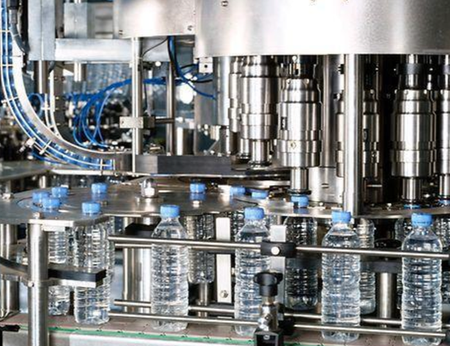
- Ingredient dosing. Food-grade brass and stainless steel valves precisely shut off the flow of syrups, juice concentrates, drinking water, and vegetable oils into process mixers;
- CIP cleaning circuits. Stainless steel valves control the automatic distribution of hot alkali, nitric acid, and disinfectant water during the CIP cleaning of process pipes;
- Beverage filling. Ultra-fast solenoid valves perform the final cutoff of finished product portions on high-speed carousel and linear filling machines;
- Hygiene control. The special geometry of the valve internal cavities eliminates stagnant zones, prevents bacterial growth, and ensures 100% rinseability of product residues.
Pharmaceutical manufacturing
In pharmaceutical production, the demands for purity and precision are at an all-time high. Factories utilize specialized automation at all stages of drug synthesis, where the slightest biological or chemical contamination can ruin an entire batch worth millions: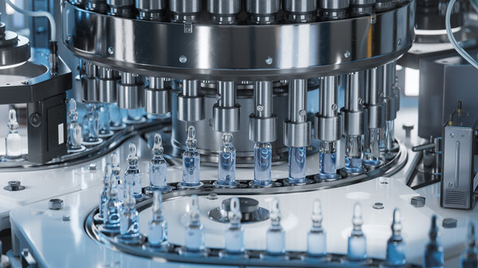
- Sterile processes. Diaphragm-separated valves isolate vaccine, saline, and serum flows from contact with the metal plunger and spring, thereby preventing cross-contamination;
- Purified water systems. These devices continuously circulate and distribute water for injection and pure steam, and withstand regular thermal and chemical sterilization of the lines;
- Laboratory automation. Specialized microvalves perform precise microdosing of liquid components and reagents during automated analyses and tests;
- Dosing applications. Instruments with ultra-fast response times measure the volumes of active ingredients before feeding them into reactors to produce finished liquid and tablet dosage forms.
Steam and heating systems
High temperatures, water hammer, and thermal shock can destroy standard industrial valves within days. Boiler rooms, industrial steam networks, and autoclaves rely on specialized steam control valves designed to withstand severe thermal and mechanical loads:
- Steam distribution. Piston valves regulate the flow of dry, superheated, and saturated steam into chemical reactor jackets, heaters, and industrial drying chambers;
- Condensate management. Automation promptly opens drain lines to discharge accumulated condensed water from main steam lines, protecting pipes from destructive water hammer;
- Heating control. Proportional modifications of electromagnetic valves smoothly adjust the coolant flow rate while maintaining the set temperature in plate and shell-and-tube heat exchangers;
- Industrial utilities. High-temperature devices provide immediate emergency shutoff of hot water and steam supply lines when critical deviations from boiler room safety parameters are detected.
Pneumatic automation systems
Process control isn't limited to fluids; compressed air control is essential for driving hundreds of mechanical components. Automated assembly lines employ reliable pneumatic automation valves, which act as pilots for large actuators: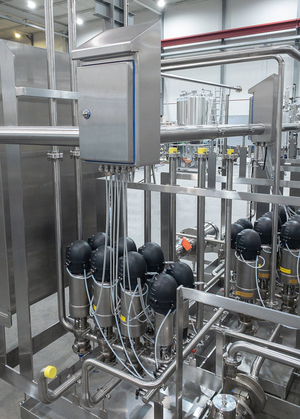
- Compressed air control. Pneumatic distributors, manifolds, and modular valve islands distribute purified and dehumidified air to individual pneumatic lines and factory workshops;
- Actuator operation. Configuration valves change the direction of air flow into the cavities of pneumatic cylinders, thereby causing them to linearly move machine components;
- Machine automation. High-frequency pneumatic valves in packaging machines are used for instantaneous, targeted removal of defective products from fast-moving conveyor belts;
- Packaging equipment. These devices control the vacuum supply to the suction cups of robotic grippers, cardboard box forming mechanisms, and blister sealing units.
Choosing the Right Bürkert Valve for Your Application
Selecting control valves for an industrial facility is a complex engineering task that tolerates no compromise. Errors at the design stage inevitably lead to premature equipment failure, cavitation, water hammer, and costly downtime on process lines. To develop effective Bürkert automation solutions, it is necessary to thoroughly analyze the physical and chemical properties of the flow, external operating factors, and the required operating algorithm of the device. A balance between functionality and cost is achieved only through a rigorous analysis of each system parameter.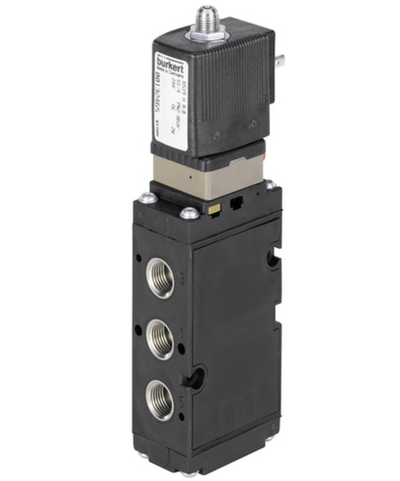
Process media
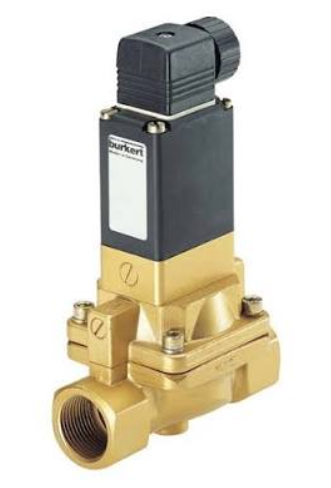
- Water. Working with standard process, distilled, or waste water requires membrane selection based on the presence of mechanical impurities and salts, which directly impacts the stability of components such as water treatment valves;
- Steam. Systems with superheated and saturated steam require piston configurations and specialized seals capable of withstanding constant thermal expansion without losing their seal, making them effective;
- Air. Compressed air requires the use of lubricated or unlubricated pilot devices that ensure uninterrupted power to pneumatic actuators and cylinders in systems where pneumatic automation valves operate;
- Chemicals. Acids, alkalis, and aggressive solvents require the use of specialized chemical process valves with complete separation of the media to prevent contact of corrosive substances with the internal metal components of the solenoid;
- Industrial gases. Flammable, inert, or liquefied gases require the use of explosion-proof coils and a higher seat tightness class to prevent dangerous leaks into the workshop atmosphere.
Operating conditions
- Operating pressure. The engineer must consider the maximum static pressure in the pipeline, as well as the minimum pressure drop, since servo-controlled models cannot physically open in gravity-fed systems or when the pressure drops;
- Temperature conditions. Proper consideration of the operating and ambient temperatures prevents the degradation of elastomers, cracking of plastic housings, and overheating of the inductive coil winding when the valve is held open for long periods;
- Flow requirements. The flow area should be selected based on an accurate calculation of the required volume of liquid or gas flow per unit of time, allowing for the optimal selection of industrial solenoid valves without the risk of reduced line performance.
Valve function
- Discrete control. The basic two-position opening or closing function is used in most standard automation loops that require rapid flow or shutoff of a medium based on a controller signal;
- Proportional control. Used in intelligent precision dosing and mixing systems, where a valve controlled by a PWM signal smoothly changes the plunger position, ensuring stable industrial fluid control in the line;
- Emergency shutoff. The use of normally-open or normally-closed modifications ensures automatic system reset to a safe state in the event of a sudden power outage or an emergency.
Material selection
- Brass. An economical and durable material that is ideal for neutral media such as clean water, compressed air, light oils, and inert gases at moderate temperatures;
- Stainless steel. The chemically resistant alloy is indispensable in pharmaceutical factories and food processing plants, which guarantees the absence of stagnant zones and complete sterility, which is extremely important for such units as food/beverage;
- Engineering plastics. Polypropylene, polyvinylidene fluoride, and polyamide are used to handle concentrated acids and alkalis, and provide absolute corrosion resistance where metal would deteriorate within weeks.
Field Insight: “The best valve isn’t necessarily the most expensive one. The right choice depends on matching the valve materials and specifications to the actual process conditions”.
Common Challenges and How Bürkert Valves Help Solve Them
Any industrial production faces standard physical challenges that reduce the service life of automation equipment. The implementation of high-quality equipment allows us to successfully mitigate these negative factors.
| Industrial Challenge | Valve Solution |
Media contamination | Appropriate material selection |
Frequent cycling | High-cycle valve designs |
Corrosion | Stainless steel construction |
Process instability | Fast response control |
Downtime | Reliable automation |
Industrial Challenge | Valve Solution |
Frequently Asked Questions
What are Bürkert solenoid valves used for?
These devices are designed for automatic flow control of liquids, gases, steam, and compressed air in industrial circuits. They perform discrete shutoff (open/closed), flow distribution between multiple lines, and continuous proportional dosing of fluids based on signals from programmable logic controllers (PLCs). The valves are integrated into water treatment systems, conveyor lines, packaging machines, chemical reactors, and heating units, replacing manual valves and providing response times ranging from a few milliseconds to tenths of a second.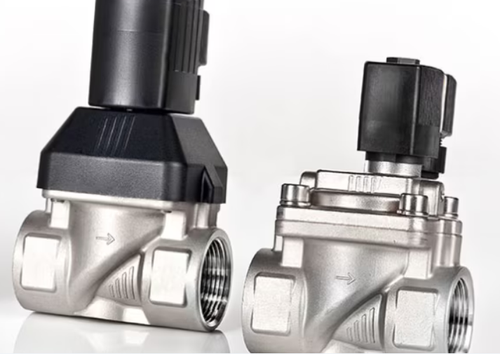
Can Bürkert valves handle chemicals?
Yes, our wide range includes specialized solutions for transporting concentrated acids, alkalis, saline solutions, and organic solvents. These modifications utilize a rocker or membrane separation mechanism, which completely isolates the solenoid's internal metal components (magnetic core, spring) from contact with the measured fluid. Chemical series bodies are made of chemically inert polymers, and seals are made of highly resistant elastomers, such as fluororubber or perfluororubber, which are resistant to degradation when exposed to highly aggressive agents.
Are Bürkert valves suitable for food applications?
Yes, the company manufactures a line of hygienic valves certified to strict international FDA, 3-A, and EHEDG standards. The bodies of these devices are precision cast or milled from high-quality AISI 316L (1.4404) stainless steel, with mandatory electrochemical polishing of the internal surfaces to a roughness of less than 0.8 µm. The valve flow path is designed without dead zones or pockets, preventing the accumulation of product residues and the growth of bacterial cultures. This also allows the devices to be used in automatic CIP and SIP systems.
Can Bürkert valves be used with steam?
Yes, steam series valves have been developed for operation under high thermal loads. They can operate reliably at working fluid temperatures up to +180°C (and in a special version, up to +250°C). Unlike standard water models, they do not use elastic rubber diaphragms, which quickly deteriorate under thermal stress. Instead, they are equipped with metal or rigid piston mechanisms with PTFE or graphite sealing rings. The solenoid coils themselves have the highest thermal insulation class, which prevents interturn short-circuiting under prolonged exposure to heat from the housing.
How do I choose the right Bürkert solenoid valve?
For correct selection, it is necessary to conduct a sequential analysis of the hydraulic and operational parameters of the system using the following algorithm: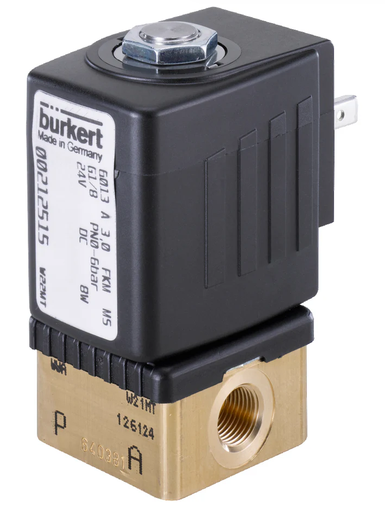
- Physical and chemical properties of the medium. Determining the viscosity, density, aggressiveness, and final state of the fluid to select the housing and seal materials;
- Pressure dynamics. Calculation of the minimum, working, and maximum pressure at the installation point, which determines the need for direct-acting, servo-controlled, or forced-lift designs;
- Flow capacity. Determining the required flow rate and calculating the nominal coefficient Kv to prevent performance loss or cavitation;
- Power parameters. Selecting the control voltage (24V DC, 230V AC) and coil operating mode, taking into account the duty cycle (100% duty cycle);
- Environment. Considering the external temperature, humidity, dust, and moisture protection class (IP65/IP67), and the need for explosion-proof design (ATEX/IECEx).

Author Caroline Karol,
Chief Sales Officer of Eltra Trade s.r.o.